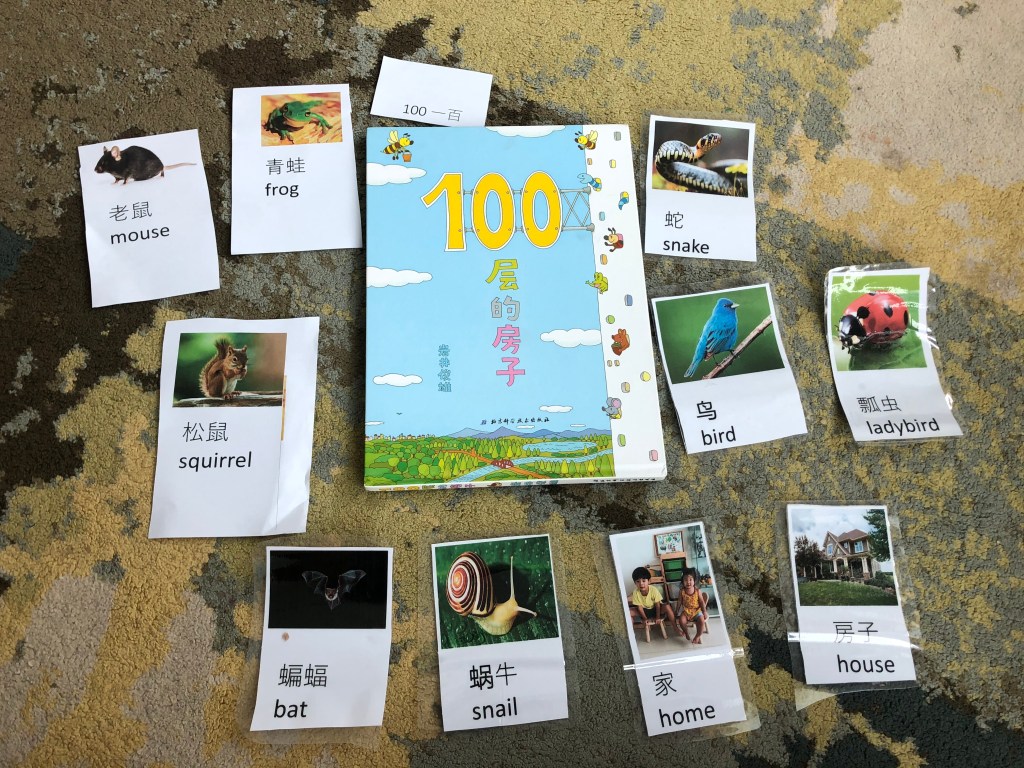
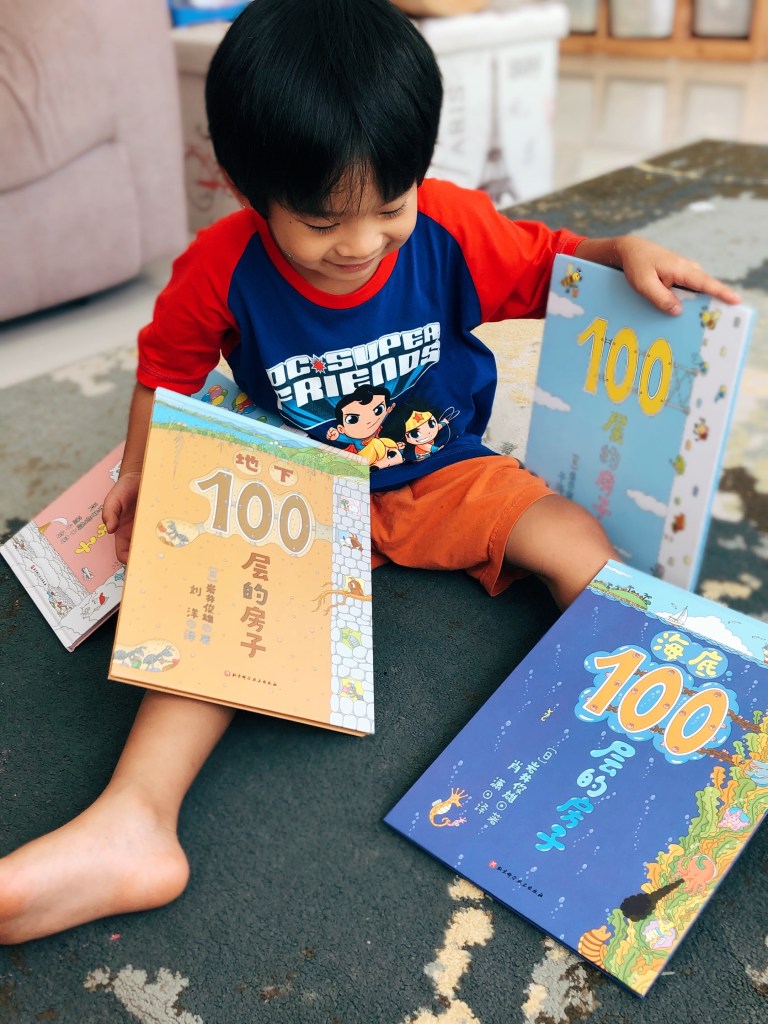
A friend lent us a great Chinese book 一百层的房子. This is the FIRST Chinese book that he loved! ( He loves another book – Sunflower, but it is not a Chinese book to him as mummy has translated it fully into English while “reading” the book to him). I wanted to find follow up activities surrounding this book but I could not find any.
So this is my humble attempt to put together a lesson plan as how I like it — integrating Lang Arts, music, art, geography, math , science and bible (separated segment that non christian audience may enjoy the lesson plan as well).
And I will be sharing it free for all!
The lesson plan spans 6 days, mirroring Five In A Row curriculum that you read a good book at least 5 times in a row and do some follow up activities surrounding it =) The Singapore Ministry of Education Primary English framework (STELLAR curriculum) follows this pedagogy too – except that it doesn’t include art, science, mandarin, math and geography- for now =) )
This is a really packed 6 day lesson plan, pick and choose your activities, do it at your own pace. My son took about a week and a half to complete it. And YES we did everything in there– tried, tested and refined =)
Background – My son is 3.5 years old, he does not speak mandarin at home or in school. His mandarin teacher has to translate her instructions into English for him to be able to keep up in class. I am working hard to try to create a more mandarin rich environment for him, though most of the time, I will revert to speaking in English after a few sentences.
Below are some pictures of the activities that we did.
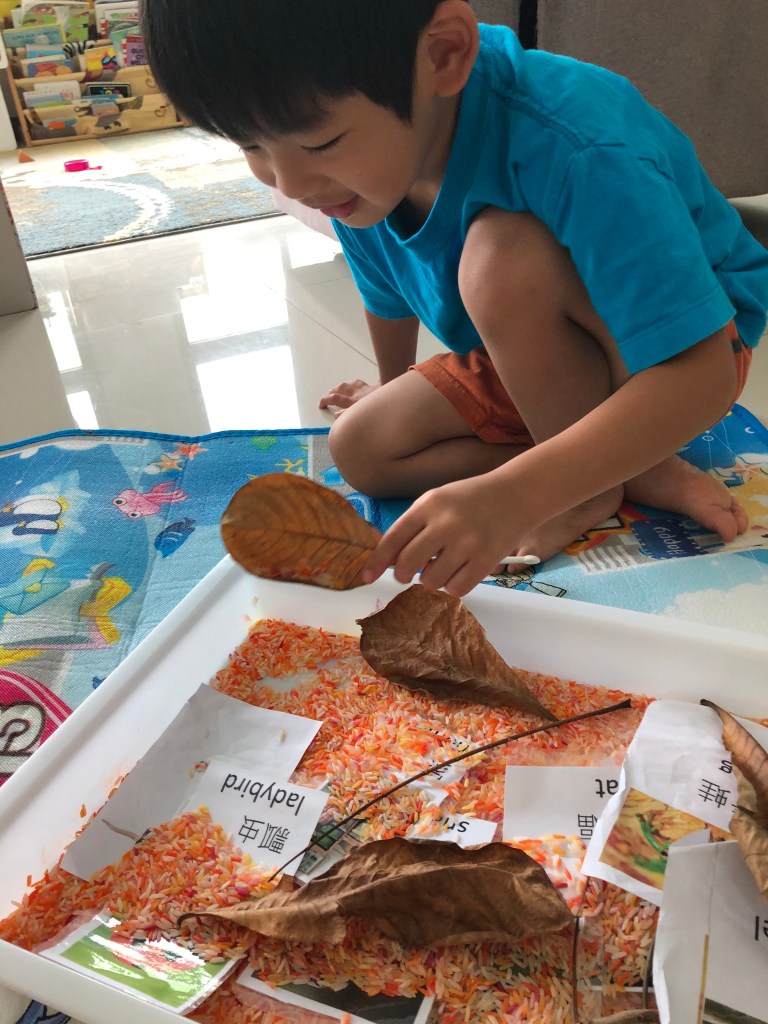
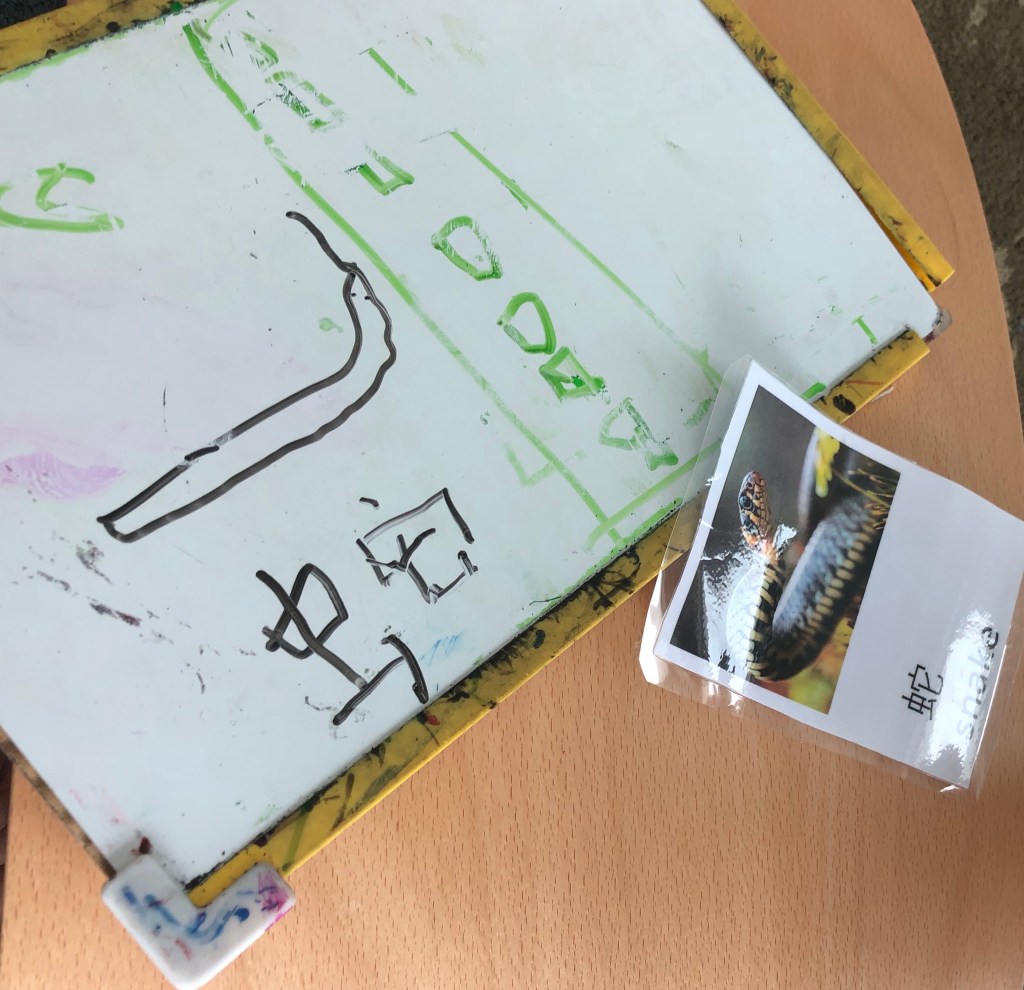
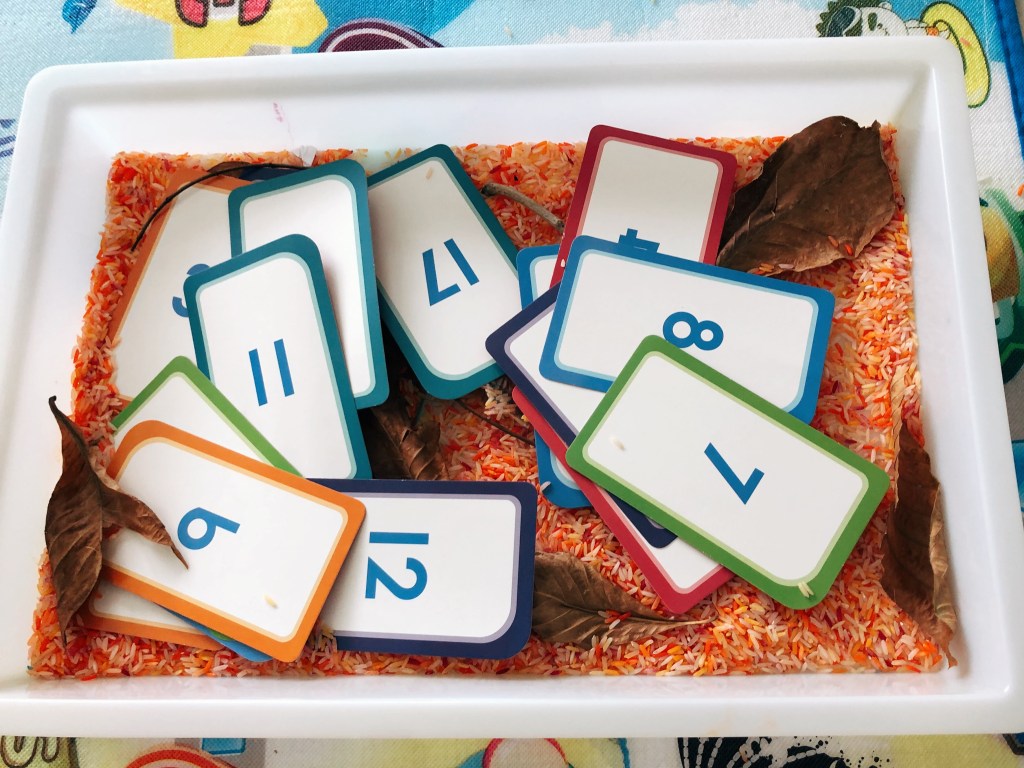
Recognising words from flash cards, flashcards avail from downloads below as well. Finding words in sensory traysPractising how to write chinese characters
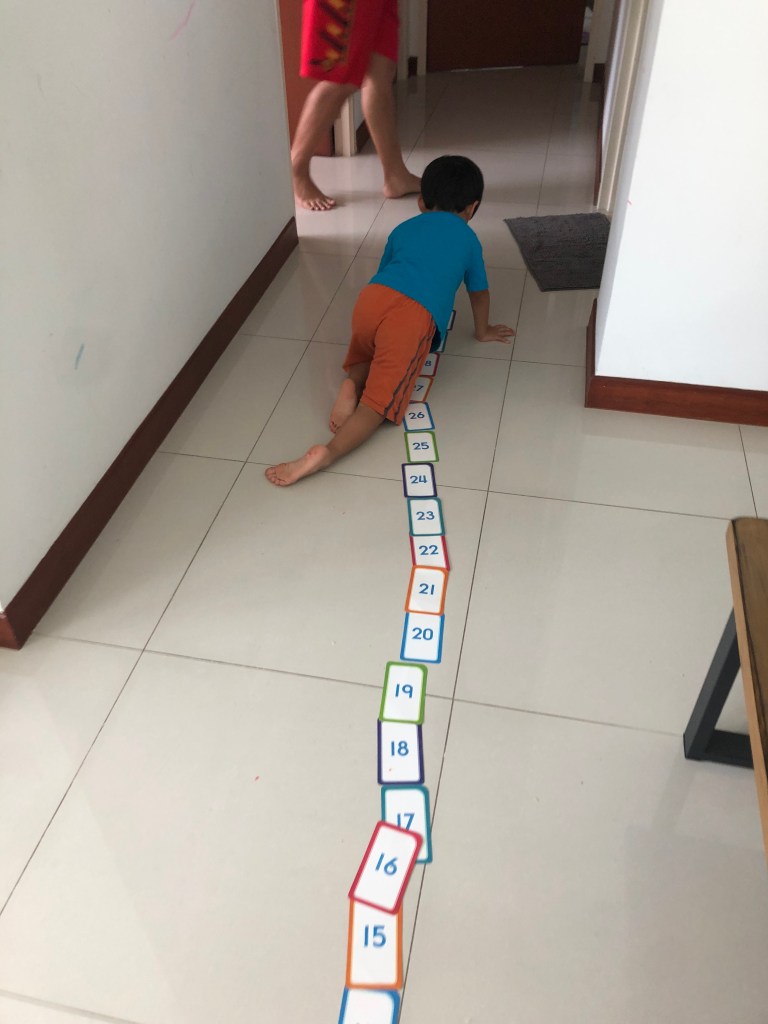
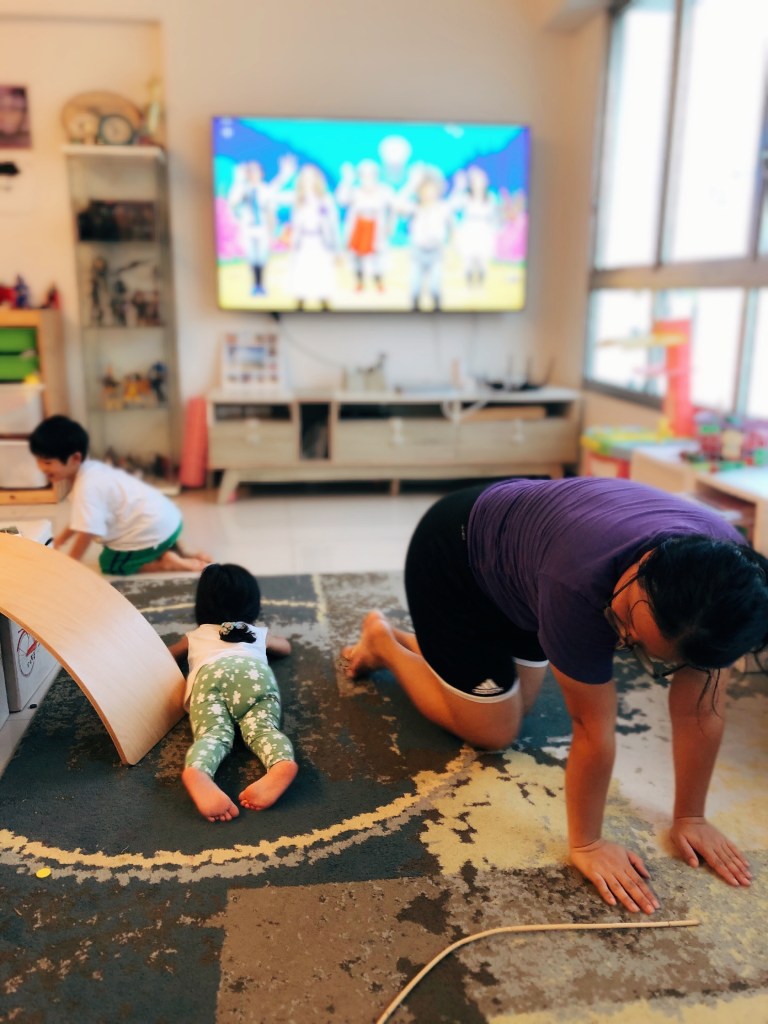
Navigating a mapOrdering 1-100Let’s pretend to be a 蜗牛
Playing modified charades with unsuspecting guests
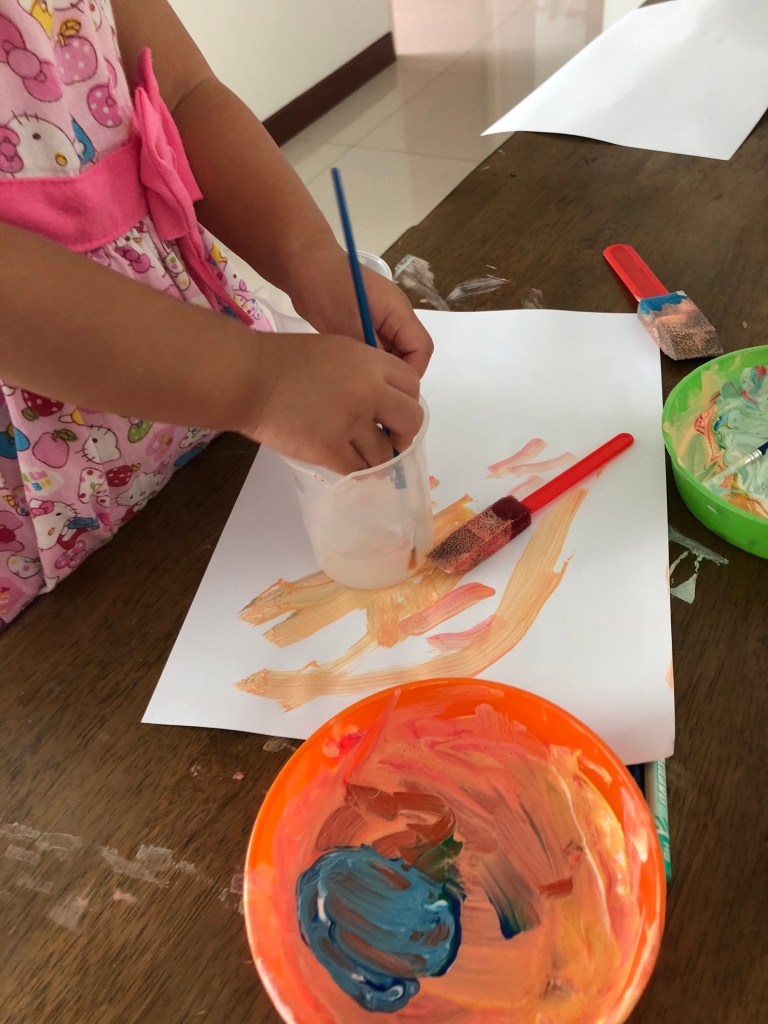
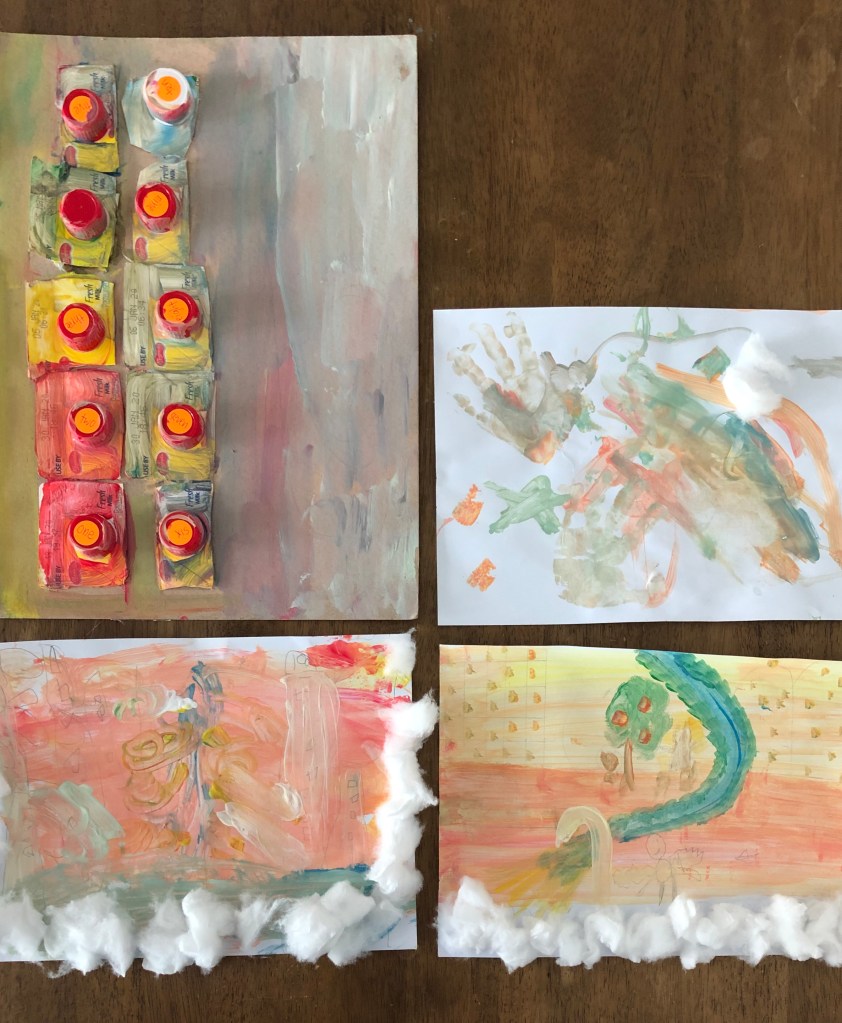
painting their imagination of heavenOur final pieces of heaven
Where to get the books?
Do check out Mystorytreasury https://mystorytreasury.com for the books. They have the whole set =) They also have a Chinese Sudoku generating app!! Super cool =)
Do contact me on Instagram https://instagram.com/shalemshekinah if you have any questions about the lesson plans or how to get the book as I don’t have not much of an idea how WordPress can be use as a point of contact.
Feel free to share this post around and leave a comment! Do follow us on IG for more fun learning activities !
Download free lesson plan and flashcards (PPT)below!
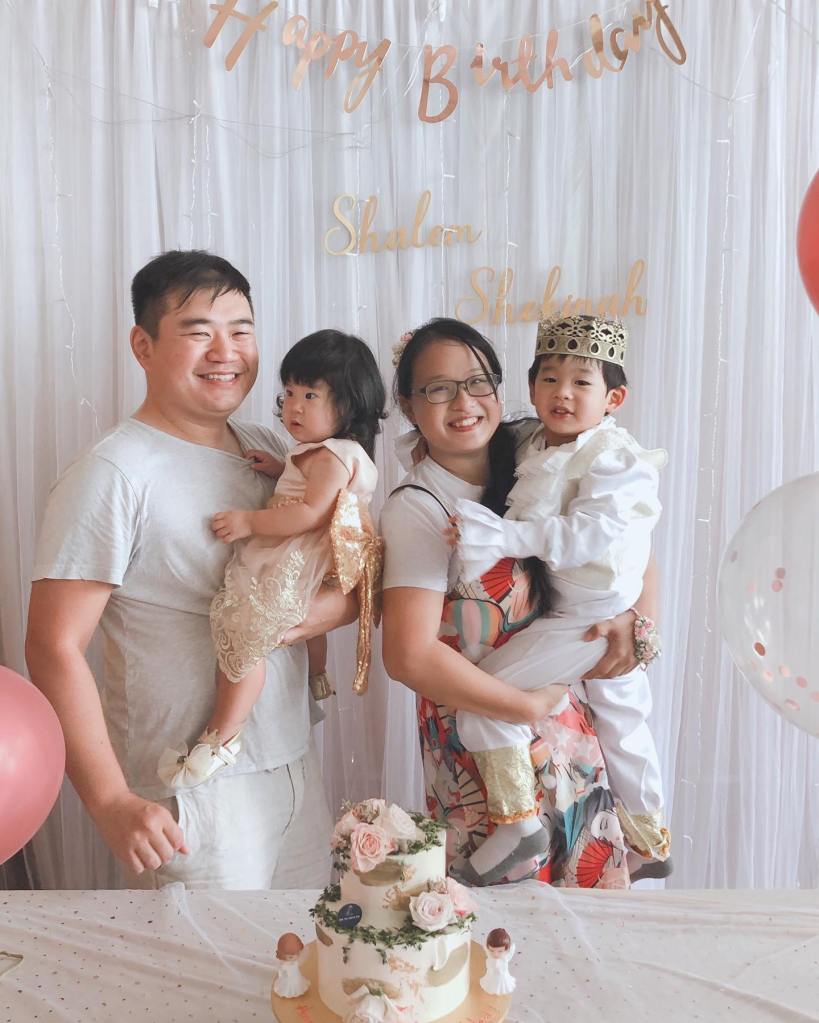
I am Dinah. I am a Primary School teacher on a hiatus to be present with my hubby and children, Shalem (3) and Shekinah (1). Being a teacher at heart, I cannot help but create and share teachable moments in my every day interaction with my children.
It is a tiresome but joyous journey to be a stay-at-home-mum (SAHM) for 2 kids under 3 and I am not sure if I will be posting much on this site. May whatever little that I can share be a source of inspiration and encouragement to others!
Print outs from Hiroandjack , link available right at the bottom of this post!
Advent and Christmas might be an overwhelming time for some parents. There is a pressure to plan for the most perfect craft, buy the most perfect gift, cut the most perfect tree, put up the most perfect decorations, prepare the most tastiest feast– even find the best opportunities to help others. Sometimes we forget to do all these from an outflow of love and joy – the spirit of advent. For Christians, we forgot to do it from an outflow of Christ’s love and the joy and anticipation of Christ’s coming, where he like 2000years over, came and brought love, joy and peace in a ear of darkness and silence.
Children remember best what we did with JOY with them. If Advent feels overwhelming, like it did so for me, momma, we can rest first. Let God fills our hearts with the love, joy and peace of the advent season and then with that joy , find something we feel joyful to do with your kiddos — and this activity will be most fun and memorable for your family. (May not be an activity, can be an outing where everyone feels most loved by)
For me, the most memorable advent memories were the weeks before Christmas where we sang carols together as a cozy youth group , preparing for carolling sessions in public spaces. As a young youth, after singing these carols almost daily for a month, I felt that I was transported to the Lil Town of Bethlehem where I see lil baby Jesus laying on a manger. I felt as earnest as the Three Kings of Orient are . For moments, I thought I was an angel on the plains, singing to shepherds Gio in Excelsis Deo, Christ the Saviour is Born.
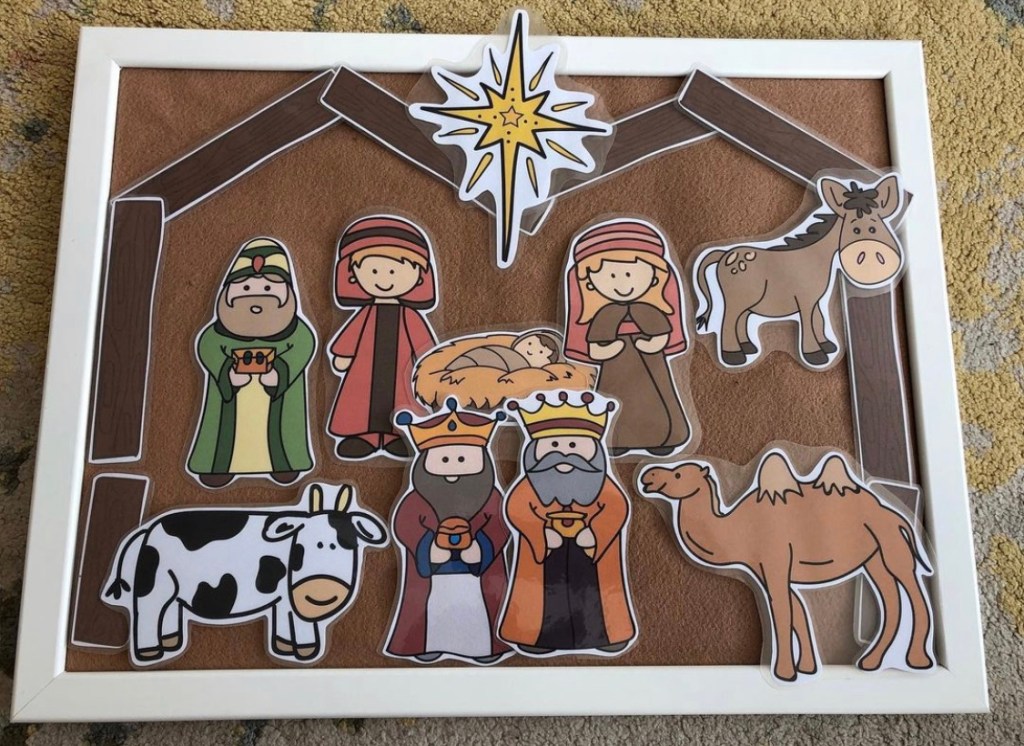
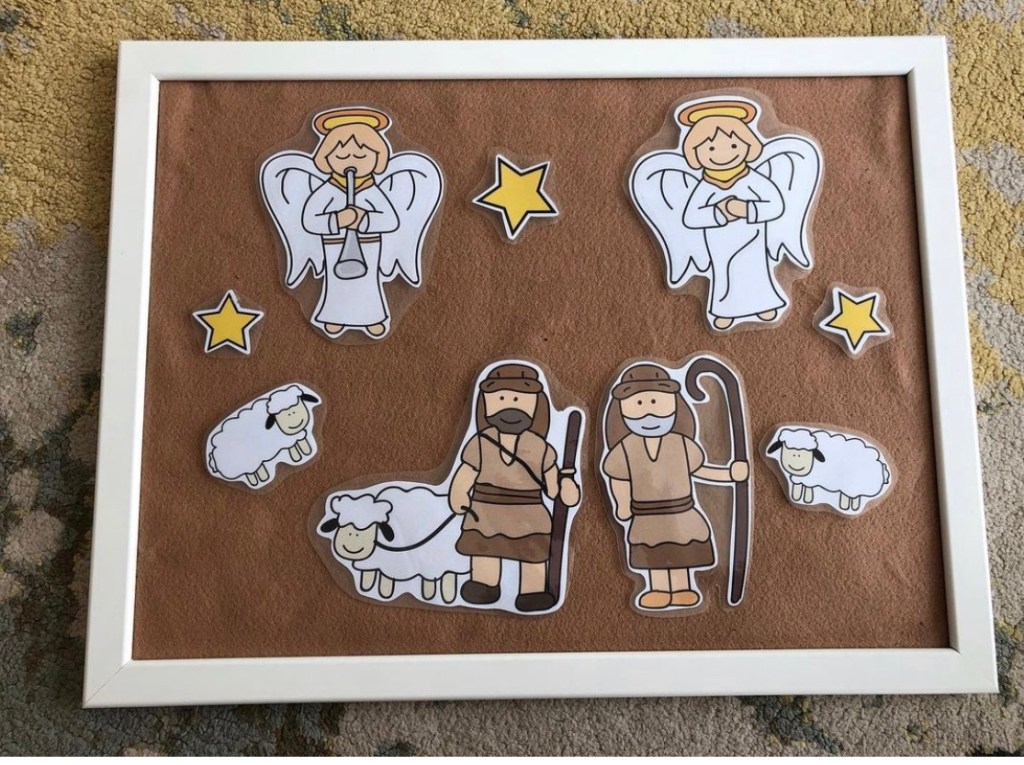
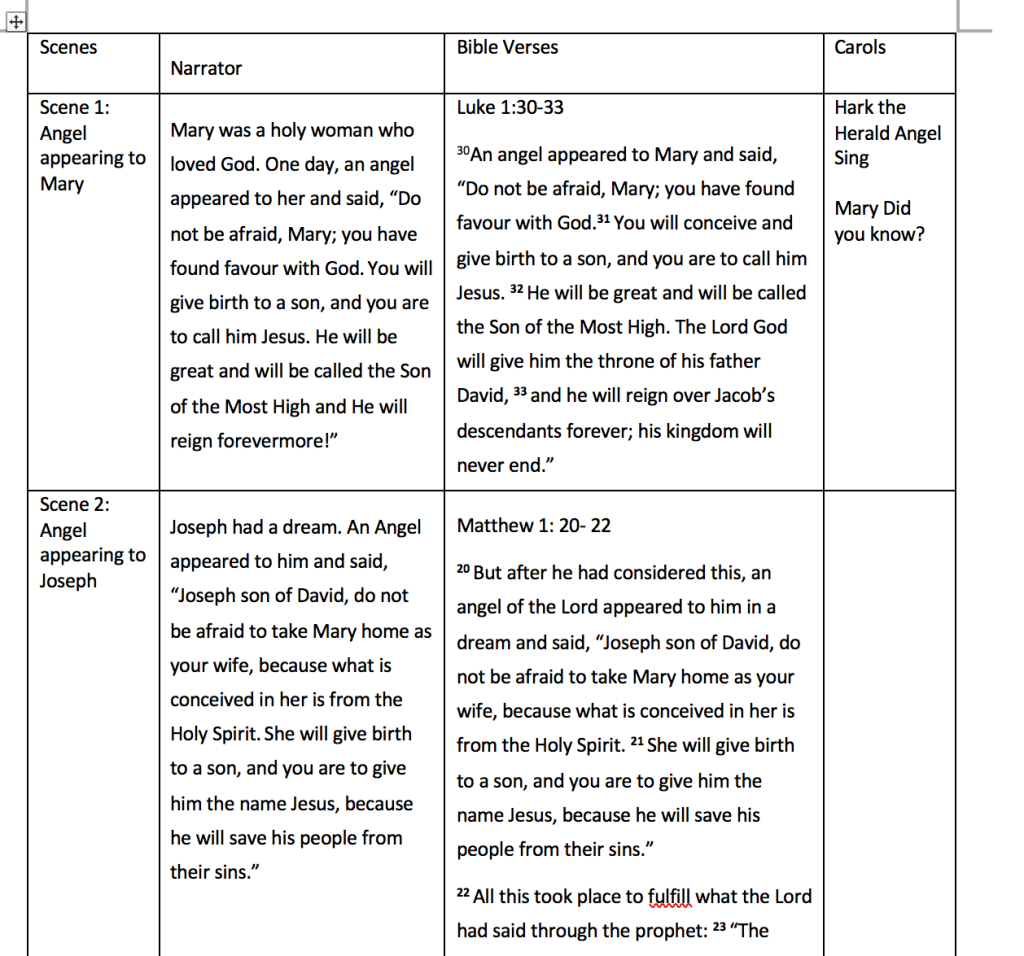
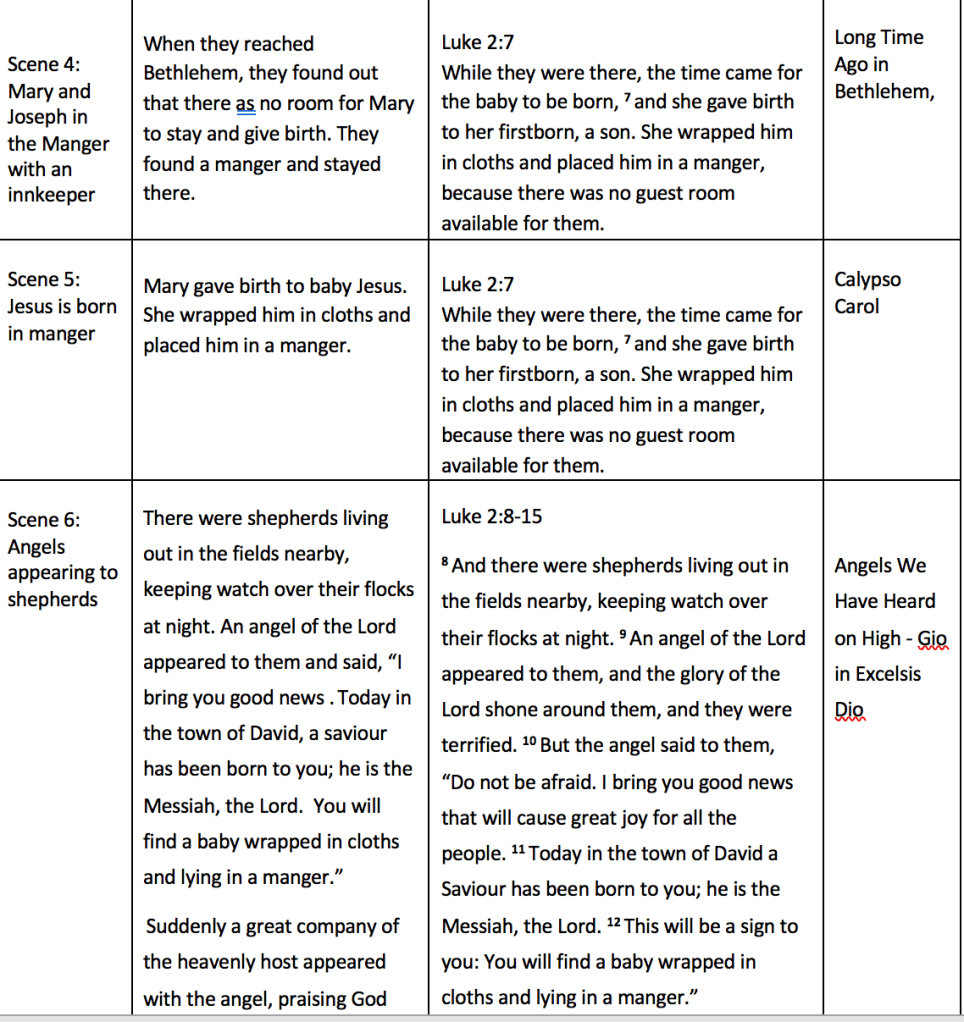
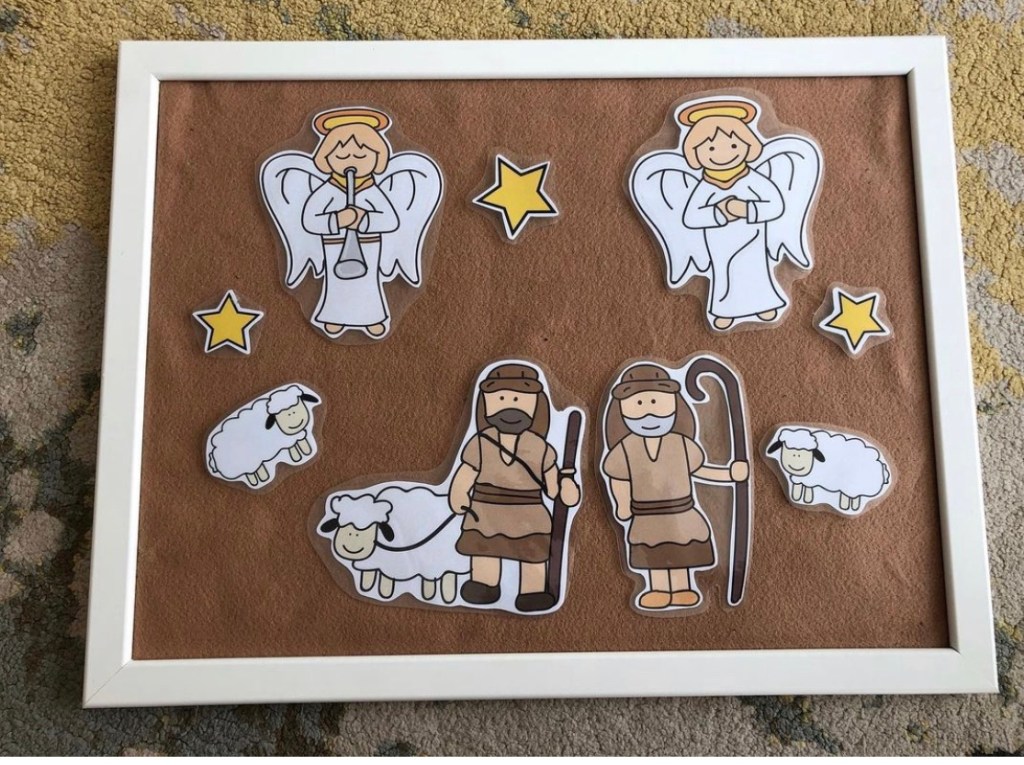
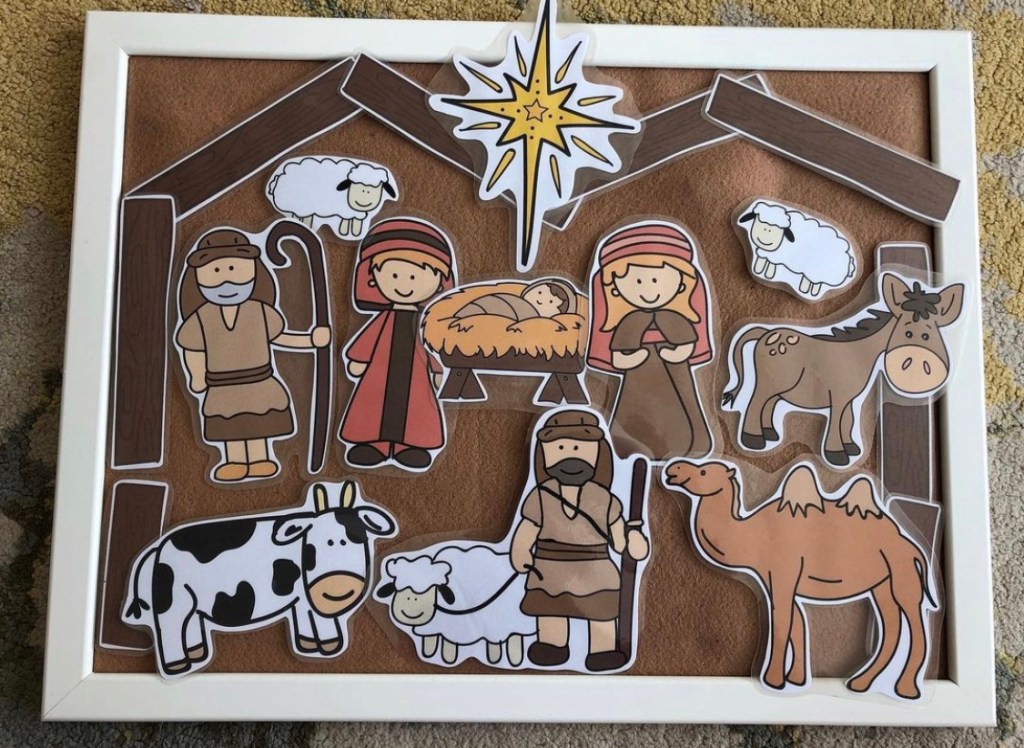
This advent, I hope to bring Christmas to my kids with introduction a few characters of the nativity story a time, accompanied with carols and the actual bible narration as well. (Free downloads of nativity narration in scenes and accompanying carols below)
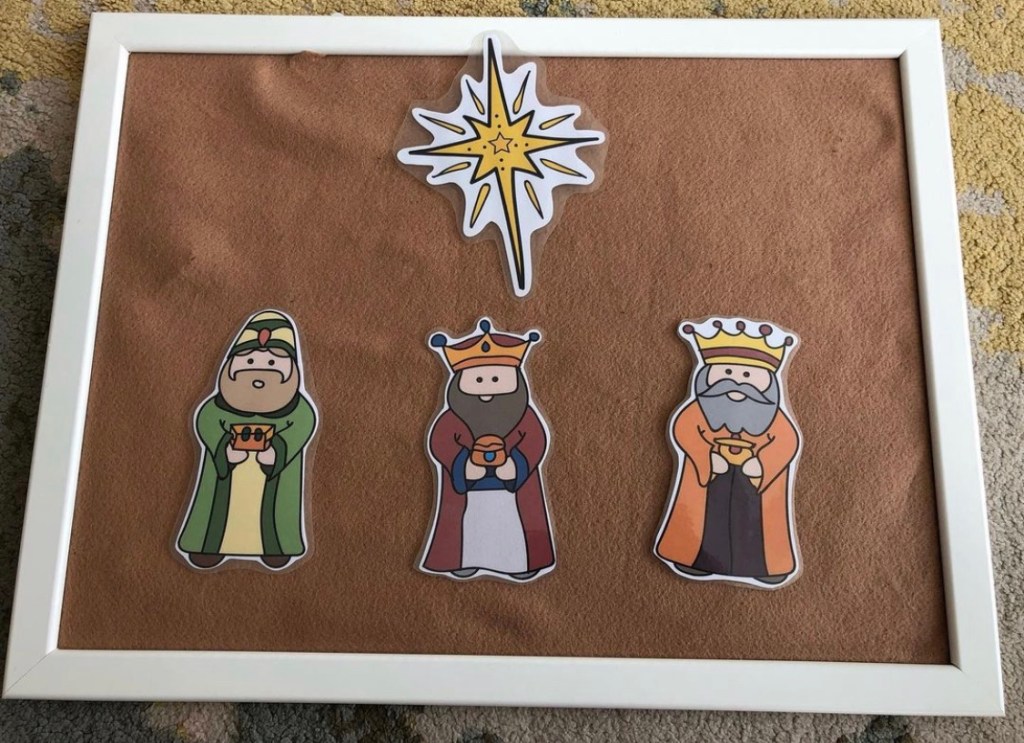
Scene 9: Three wise men bearing gifts and visiting Jesus
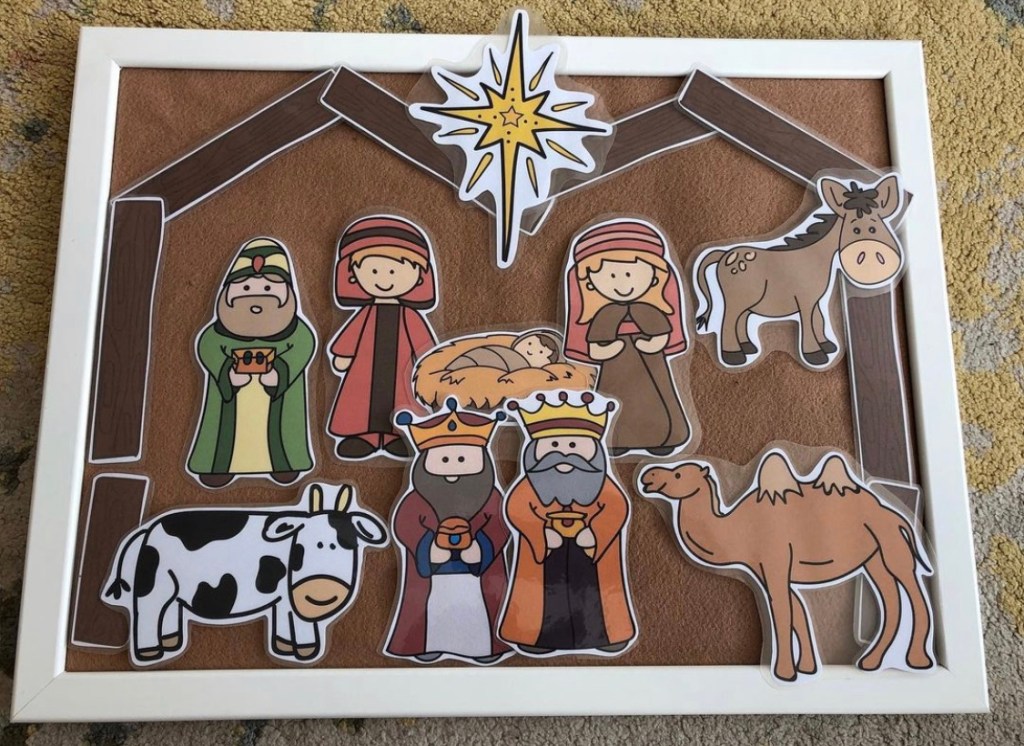
Scene 10: Everyone together, Wefie =) JOY TO THE WOLRD! Merry Christmas
Seems like my advent is only 10 days long this year =) That will leave time for chill moments, time for each other and time to bless others.
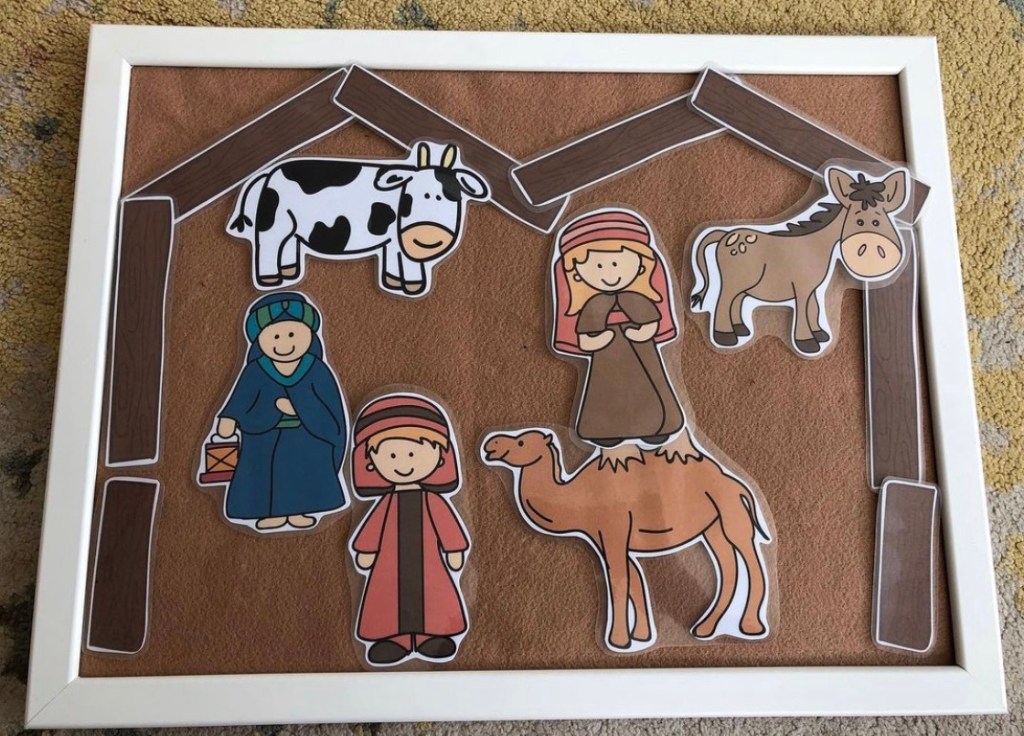
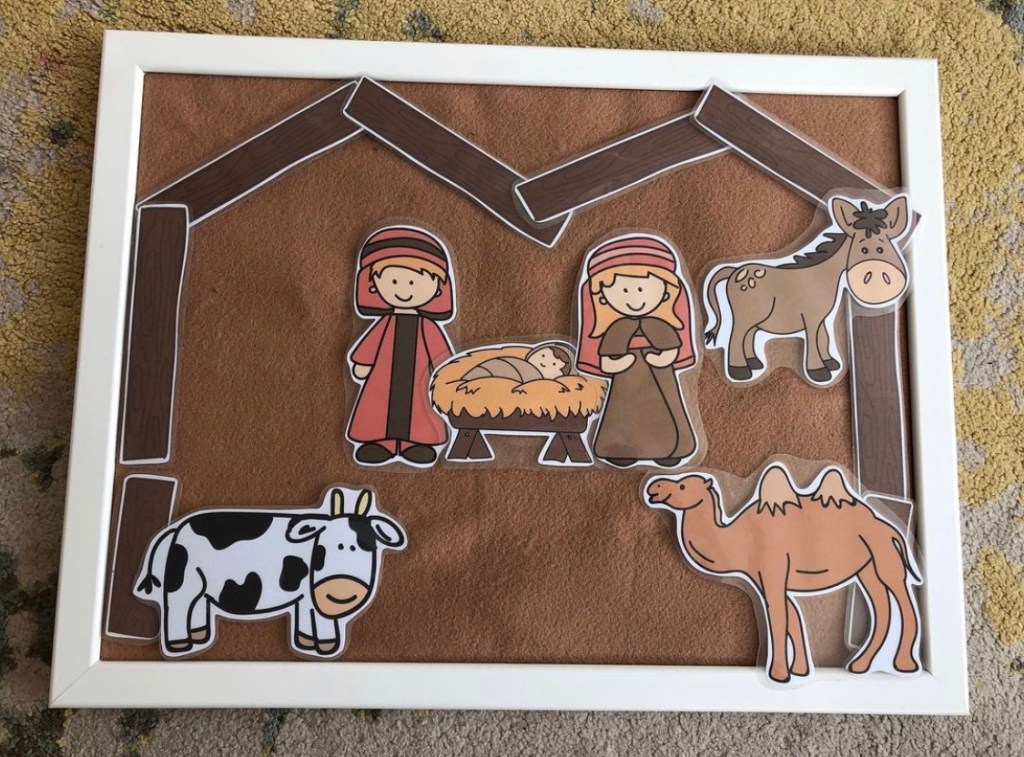
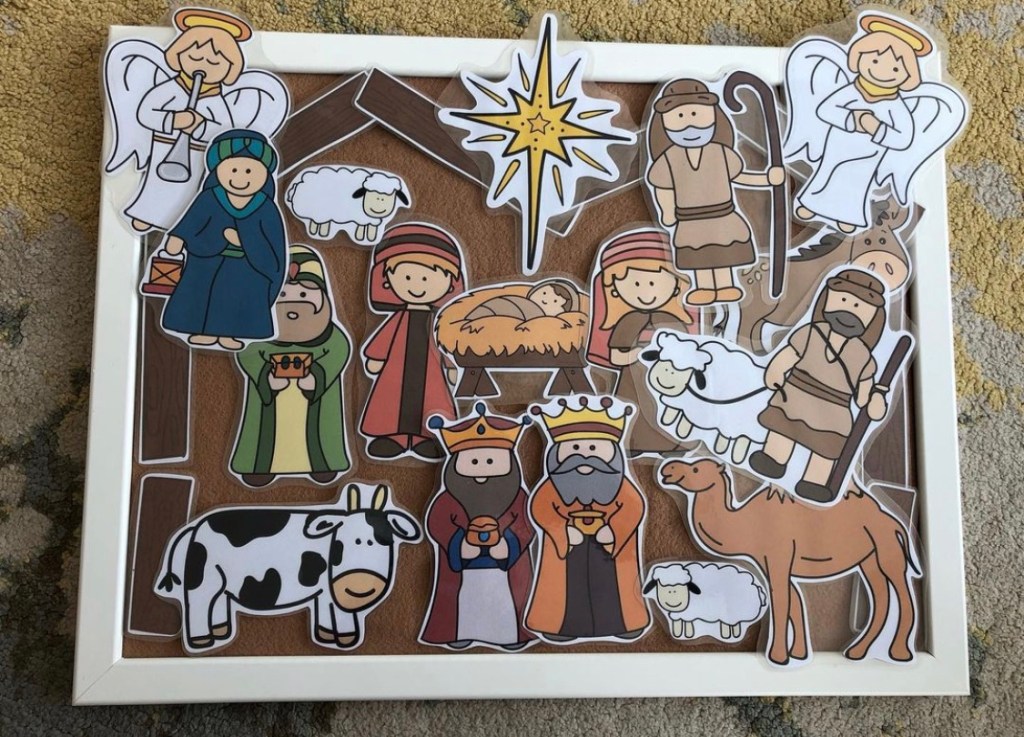
Previous years I have DIYed my nativity figures ! It works fine and there are a wealth of resources on the internet, just google and you can find. You can get a photo frame from Ikea which I did, and slip in a felt sheet and you can have a felt nativity play =)
But for the past two years, we are really lucky to work with a local artist who designed 32 nativity cut outs. The nativity cut outs above are from this humble local shop ! Soft copy is available for purchase and downloads, hard copy with velcro attached for FELT play are available too.
Contains a 6 day lesson ideas for the award winning book, Dear Zoo. Also contain a note on memory retention techniques!
While writing this, Shalem was 3 year and 1 month old. He had mastered all the initial consonants sounds and the vowel sounds. He was able to recognise and write alphabets in both upper and lower case.
The Singapore Stellar Method In the Singapore Pri EL classroom, we introduce a good book to the class and for the first day or two, devour the book as a class. We ask questions, enjoy the illustrations and try to predict what happens next. Then over the course of 2 weeks, we learn grammar, vocabulary, language features, text structures from the book we read. We have extension activities and it culminates in a writing/creating task where we put all that they have learnt together.
So here I am, trying to mimic something like stellar for Shalem. Here’s to documenting the very raw, very learner centric Dear Zoo journey !
Day 1 We read the book Dear Zoo. We only managed to look at the cover when he was so excited to show me that we can spell Zoo and wrote it out. High interest level is a great start! We enjoyed the book and he caught the repeated language structure in the book that we could complete my sentence towards the end of the book.
Day 2 We read Dear Zoo again. It is a good practice to reread a familiar book so that your child can pick up key language structures. If you feel that it is getting boring, you can spice it up by speaking in a more exaggerated voice, or getting your child to act as the animal that was being read).
I introduced the Dear Zoo puzzle after we read the book and Shalem was really engaged and ready to piece them together. I threw in descriptions of the animals while we are at it.
It’s great to give related activities as extensions to the book as it helps them to consolidate their learning in another context. Learning becomes more meaningful as well . And anything that is fun and interesting gets retained in our brains longer-I’m sure we all can attest to that !
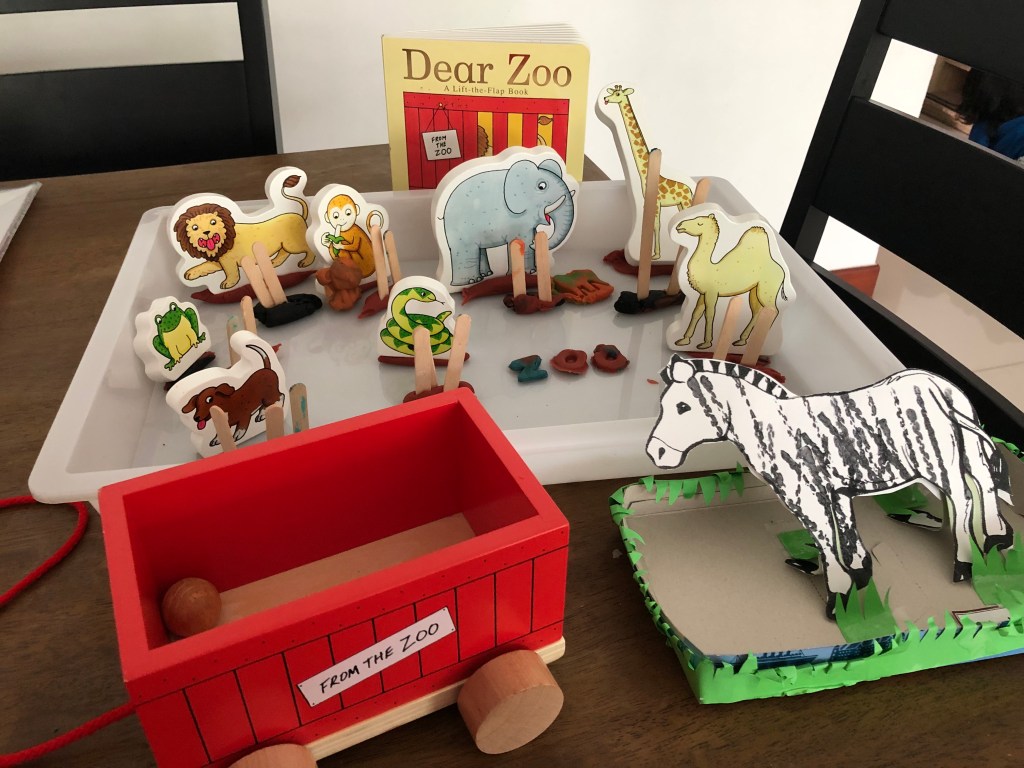
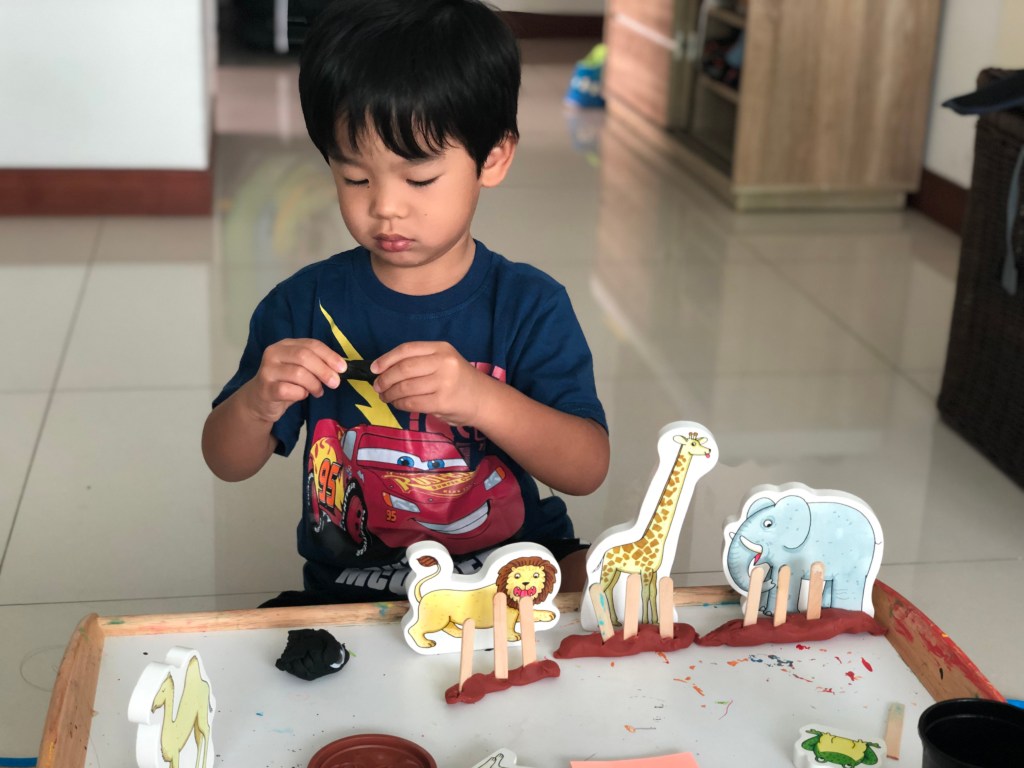
Day 3 Read book again + animal skittles + play dough—- Some kinesthetic activity for my very kinesthetic person
We built cages for the animals that were “sent back” to the zoo. There are two fold aims in this activity. Firstly, it is to encourage retelling of the story ( Recall = Effortful processing = transferring memory from short term memory bank to long term memory) and second is just for him to enjoy interacting with the play dough and the skittles.
This paid off, his affection for the Dear Zoo book grew and now this book is on his ” Must read” list before bedtime. Kids and adults learn best through play don’t we? He didn’t hold on to the preconceived plan of making cages for long and went on to free playing with his play dough but that’s ok!
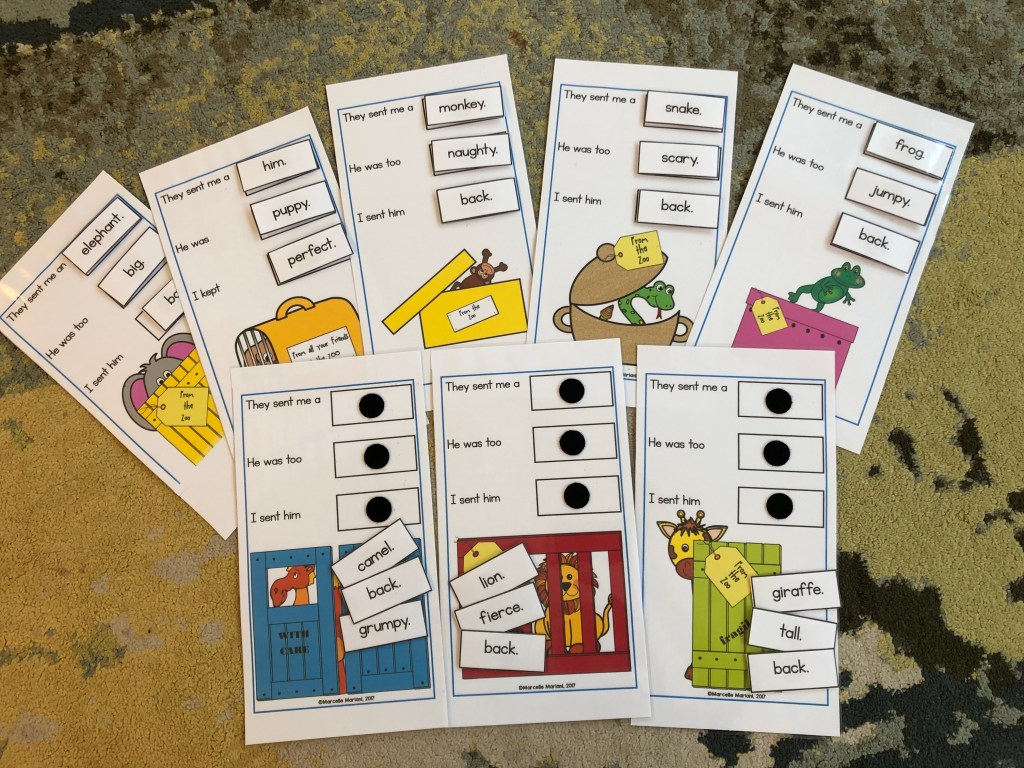
Day 4 We skipped book reading today and dived straight to colouring animals and cages. I intend to laminate them and make them into placards for sight word reading. We learnt much about making language visible in our learning environment. It helps the child to absorb language implicitly. But my hubby is a minimalist and loves having plain white walls — so we shall resort to a table top word wall .
Day 5 Reading fun! Exposed Shalem to the spelling of the animals he read about. Three techniques were employed when teaching reading:
1. Phonetic decoding — sounded out the initial consonant of each word — and can guess the animals using initial consonants alone. He has not yet mastered blending of sounds then. As I reviewed the videos from one year ago, I have been modelling the isolation of sounds and blending techniques! We started this at about 2.5years old and something clicked in him when he was 3y3m , he “suddenly” started being able to blend and read CVC words on his own. This video was taken a year ago, he has yet to master blending and is relying on initial consonants to read.
We live in an apartment and we are on the 16th floor! Boys love their elevators! Why not create a game around it. Which level does the elephant live in?
2. Spelling tricks — Little spelling tricks are effective in helping the child make connection bewteen the words and the noun.
Giraffe starts with a “G” and look , there are 2 tall letters “ff” does it look like 2 giraffes standing tgt?? Gi-rrrr—a-fff
3. Finding a word part within a word “Shalem you know N-O means no. Right. Look at this word “diNOsaur”, the first sound is a “D” , D- i , /Die/, then there is an NO – no. And then a “sssss…uar “ so this is dinosaur. Shalem is a clever toy, he might have made out that a three syllable dinosaur surely is a long word! But I’m not stressing him on the accuracy of spelling now, it’s good enough that he uses whatever tricks he has to link dinosaur to the red T-Rex.
A note on memory retention
Try to let the child see the words as much as possible. (Paste it around the house, fridge, bedroom, tabletop placard like mine above)
Use a game to arouse their interest . See videos below. Shalem which one is monkey? Get him to smack, hop, jump the correct word. And get praise when correct. Or hide a particular word and ask your child to find it. Shalem, where is my frog? Can you go find the “eff-arr—ohhh-gee “ for me? Walks around the house and hunts for the correct word with an appropriate number of distractors (other words) on the floor.
Use and spell out the targeted word in every day life, for eg , I would say, Shalem, can you pass the L-I-O-N to mei mei ? (We have a lion walker. Instead of saying the word lion, we spell it). This method works for Shalem’s retention very well. So much that viewing physical words -BIRD is very effortful decoding, but hearing it being spelt out “Bee-Eye-Arr-Dee” is so painless and almost immediately he would say “BIRD” . I used the same method, I would tell shalem. Hey shalem, look at that black bee-eye-arr-Dee there. Mei Mei would have loved to see this bee-eye-arr-Dee.” And he would often say it back “mei mei look at that bee-eye-arr-Dee. It’s so cute”
Don’t overteach. Teach only the how much your child can retain. Some children work better learning and mastering one at a time.
Mastery practice- have appropriate intervals for recall. This is perhaps one of the most important tricks I’ve learnt in my psychology module of memory when I was an undergraduate. We have to revise and recall what we learnt after some time. And several of such recalls are necessary to convert our short term memories into long term memories.
After teaching the spelling of a word, be sure to have a few rounds of practice immediately, conduct a recall test half an hour later and one more a few hours later. Then , have another recall the next day, and then another time in a couple of days. Compare Shalem’s speed and accuracy from the first video and the last video =)
Notice that I use recalling and not reading/recognising . This is because recalling is more effortful. The more effort you put in to process or retrieve an information, the more likely you are to remember it. That is why highlighting your history textbook and rereading your once does not help you ace a history test or even rmb much details, but “teaching / retelling” historical events to your toy bear actually helps more. When you retell/recall, you are reorgansing and making sense of the information at hand. This is more effortful than just reading. You can be aware of the pointers that elude you, and you can head back and revise that part again .
We started getting him familiar with the spelling of 2 animal names
When he was able to correctly recognise 2 animals, we added a few more in the mix.
This was a recall exercise a few days after the initial teaching of the reading of animal names and what a long way he has gone!
Day 6 and beyond
I let Shalem choose what activities he wants to do around this theme. And he ALWAYS goes back to reading the book first, and then playing the spelling and skittles matching game.
Beyond these tasks, IF I am free and up to it, I might search Pinterest for more interesting and hands-on activities online for Dear Zoo. There is a ton of resource for this particular book! Take your pick!
That’s the end of my sharing for Dear Zoo for now, I would love to hear from you if you have interesting ideas for this book!
One year on …..
We have another cute child who is a few months shy of her 2nd birthday. She has picked up the book and its her favourite as well =) My daughter is not as developed linguistically as her brother when he was her age ( but im sure she will catch up in no time), but she enjoys matching the skittles to the animals in the Dear Zoo book!
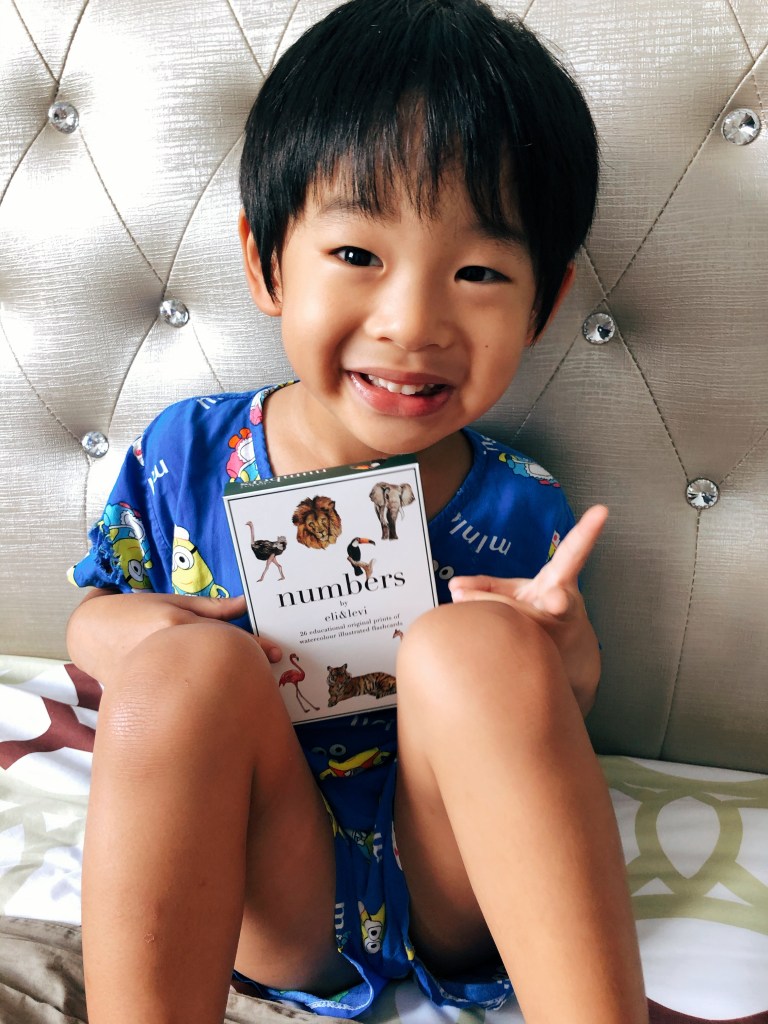
We are so glad to find this very useful math resource and its done by a local Singaporean artist mummy!
And its not simply a Math resource, the pictures on these cards are so beautiful and that children take to them so quickly– and it can quickly transform into a animal figure matching/ vocabulary lesson =) Vocab lesson ideas off my head are charades, animal actions, animal homes, animal movement etc etc!
This entry will focus on Math (suitable for 2.5 years and up) and Animal figurine matching (suitable for 18months and up) =)
What’s inside?
26 cards consisting of:
-10 animal cards -10 numeral cards with dots -5 math symbols cards (+ – x ÷ and =) -1 intro card
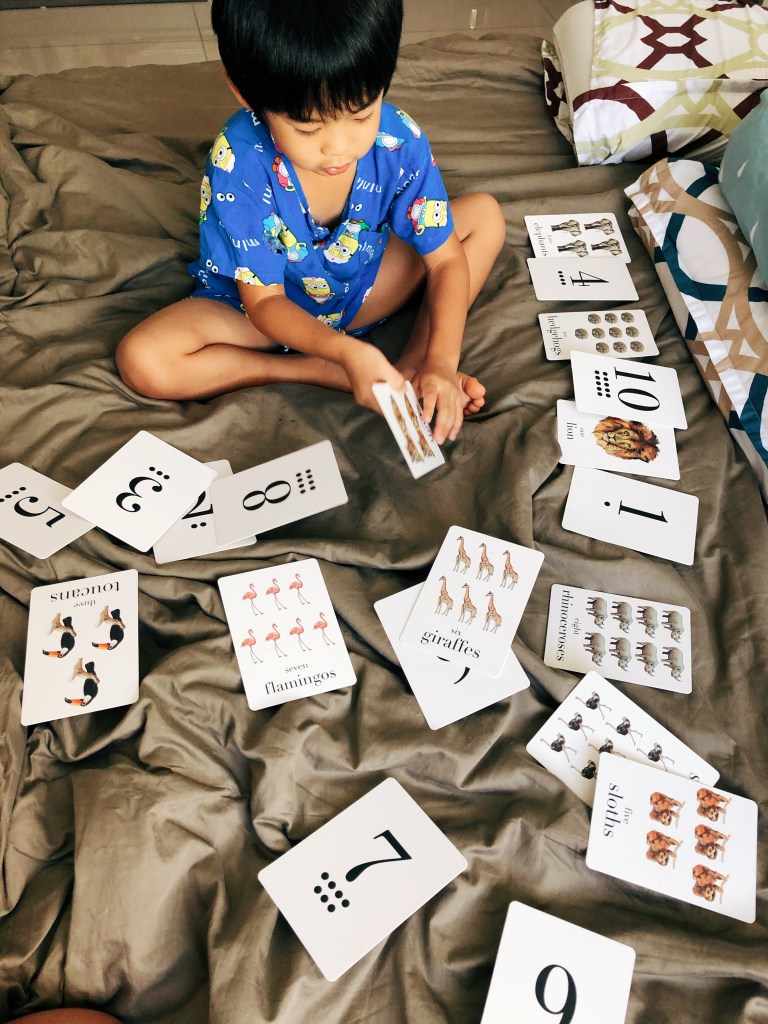
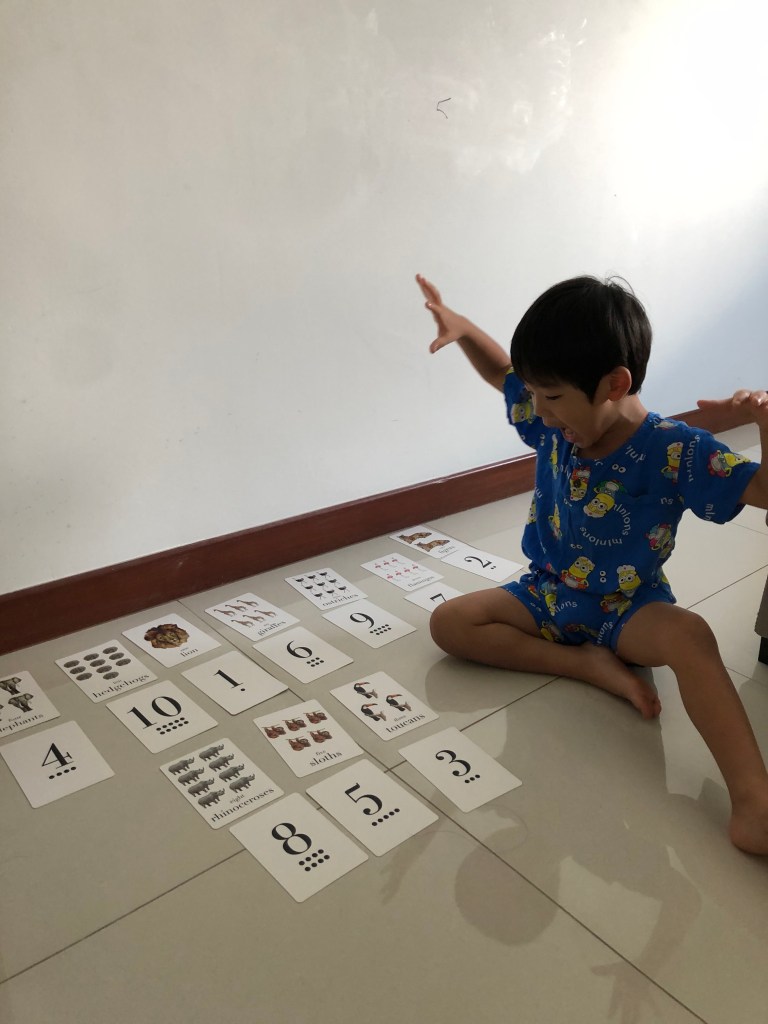
The dots are the really ingenious part. They transform an abstract number 7, to a more concrete-pictorial understanding (child can see 7 dots below 7, helps make sense of the quantity of 7)
10 Math Ideas Progressing in difficulty
Match the animal cards to the correct numeral card
I wish we had this earlier!
2. Counting the dots on the numeral card.
Ideas of play can include placing the correct number of objects on the shown numeral card. For e.g. place 2 buttons/ 2 honey stars / 2 quantity of a similar object on the numeral card 2
3. Adding up the number of animals (pictorial addition)
Give them a context (for e.g how many animals are there in mummy’s zoo?) and Kids will find it easy to count the total number of animals. Easy success! Your kids’ confidence in addition will also get a boost. It is observed that kids who are confident in their own abilities are more willing to practice and persevere longer at a task — thus getting better at it =)
4. Combination of abstract and pictorial addition
When you think your child is ready to tackle the abstract, you can introduce the addition of one numeral card and one picture card. Eli & Levi numeral cards have black dots placed below the numbers so its such a natural intermediate step for young learners.
5. Adding two numerals
Its not hard to proceed on to this step as there are black dots beneath the numeral cards. Be sure that your child has lots practice and experienced success in adding pictorially/concretely first.
6. Our current practice — Counting on instead of restarting from 1. This is an essential step to addition of bigger numbers — the ability to hold a quantity in their head and add on the next instead of counting everything from 1 again. Don’t rush into this. We spent a good 7 months prior! This is also more easily picked up from ages 5 =)
I would rather my son be accurate in counting on from 1, then him only scratching the surface for both! We are still practicing the most basic way of adding (counting on from 1) all the time!
7. Putting the bigger number in his head (He chose to put the smaller number in his head)
8. Obstacle course can be included =) Both attempts were wrong — its ok for them to make mistakes! Practice makes perfect =)
9. Mental addition
This is a chance discovery =) I believe the dots beneath the numerals helped Shalem reached his answer faster! What a great resource for an introduction and aid to mental calculation!
For Shekinah who is hardly counting — I am still counting 1-10 daily w her when she plays with pom poms/ when we eat etc (check out my first numeracy post in this blog) , I decided to let have a go at animal figurine matching instead.
And she loves them!
Look at how happy she is being able to find the animals on the cards.
A lot of brain work is going on in this simple task:
Observation of the animal on the card (this is big fat grey animal)
Scanning her memory and matched what she saw (oh I know this, Mummy has shown me this animal many times, and I have many toys of this . And we acted as one before. This is an ele!)
Hearing me speak the vocabulary (Oh mummy did say elephant, exactly what I thought!)
Processing my request ( Mummy ask me to look for another elephant)
Retaining this info in her brain ( I need to find elephant)
Searching for a match in the bunch of figurines for the info she has in her brain. (Where is this big fat grey animal?)
Over excited that my cognitive psychology concepts are flashing up =) But ya, its no easy feat and a multi step process even for simple matching such as these. CELEBRATE these small successes mummy!
We have embarked on a lovely curriculum called My Father’s World since the start of the Covid-19 lockdown. There will be another post on this if I have the time, for now this entry will be a continuation of my previous post about early childhood Mathematics. And I will focus on the topic of addition.
Upon writing this Shalem is 3 year 7 months old. We have started him on simple addition concepts and strategies (adding with his fingers) from the start of the year, when he was around 3 years 3m old.
This blog post documents our faithful journey in addition. What a journey! If you would like to see how we added, and what are the pros and cons of each addition method, do have a read!
I used a variety of addition strategies w Shalem such as ten frames, fingers, concrete/ pictorial objects, abacus, putting one number in the head and counting on.
Adding with fingers (Concrete) This is probably what all parents can confidently teach their kids and they should do many many many many many rounds of this! This will get them to be familiar with the concept of addition! Shalem was very proud of himself being able to add 3+ 5 quickly but when it comes to 6 + 2 he was fumbled. 6 to him is only one thumb up. And so 6 + 2 = 3.
And its difficult to present 6 and then add opening 2 more fingers on the other hand with the thumb up already. This may be developmental but fingers isn’t a good way for him to add beyond 6 on one side. Because of this fumbling, I thought I needed to expose him to other addition methods below:
2. Drawing objects and adding them (Pictorial) Shalem doesn’t not take to this method. Firstly, it is time consuming to draw the objects. Secondly, he insists on drawing fine details in the balls or caterpillars which distracts him from the purpose of addition. But some kids take to this method really well! and it is a really versatile tool because it enables you to count up to 20 or more objects with accuracy, compared to only 10 with your fingers. Because he wasn’t comfortable with drawing… we moved on to …..
3. Abacus (Concrete) We got a really pretty hand me down that Shalem was able to happily input the two quantities to be added in two rows respectively. And we had this amazing obstacle course which the addition with abacus is the last station. He took to it immediately and found that he could add with speed , less mental effort that the drawing, and more accurately than his fingers!
However, he was counting from 1 each and every time. For example in 5+6, he would count the objects in the first row 1…2..3..4…5 and then add on the objects in the second row 6… 7… .8…9…10..11…
When I was teaching a group of 7/8 year olds, there was always a handful of children not having a good number sense. The poor girl/boy has to count from 1 when they add or subtract. Imagine counting 36 dots 😭 and of course making mistakes along the way. Hence I attempted to teach Shalem the next method, putting the part of the equation (set of numbers) in his head and counting on with the next set — to help him in his mental math. Which was not very easy for him at all!
4. Mental addition (Abtract)
Putting the first/larger number in his head and the second/smaller number in his hand and counting on from the second number. This is a very popular strategy I use for primary 1 kids =)
6 +2 = ? 1. Put 6 in your head, and 2 in your hand. 2. Tap your head and say 6, reminding yourselves there are already 6 in your head and you need not count them from 1. 3. Count on the next 2 numbers on your fingers…. 7…8…
This was Shalem at 3y7m, it has been 3 months since we have introduced this method and he is getting there =)
When I first taught him this method, Shalem was around 3.5 years old. I observed that he had a lot of difficulty doing that. I think kids that young are still at the concrete operational age, where seeing is believing. It is hard to put 5 objects in your head and add on 2 more. You have to count them all again from the start! This lead me to read up more on subtilising. And asking my preschool teacher friends what the children are doing in preschool to help with the concept addition.
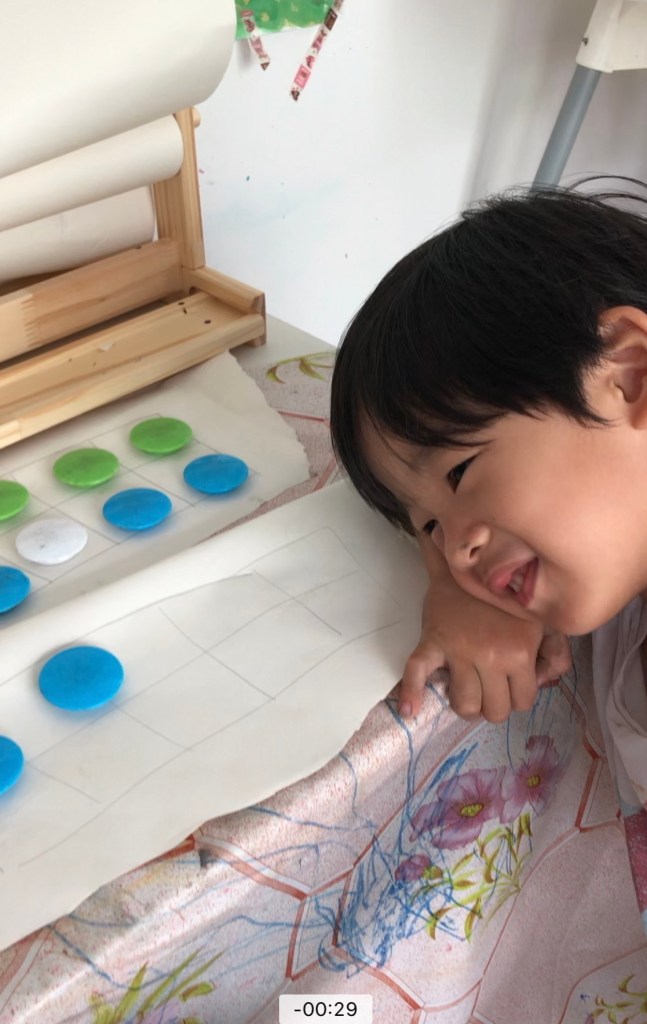
5. Ten frames (more commonly used in K1 / 4-5years old) Ten frames are a useful tool for children to learn how to subitise— which is to tell the number of objects in a set quickly wout counting. This makes addition/subtraction easier!
It’s just like how we can recognise the quantity 5 from a die wout needing to count the 5 dots.
We used the apples as the counters for ten frames. Look at how he auto-corrected himself, instead of counting on from 1, he paused and recognised that 2 rows of 5 makes 10!
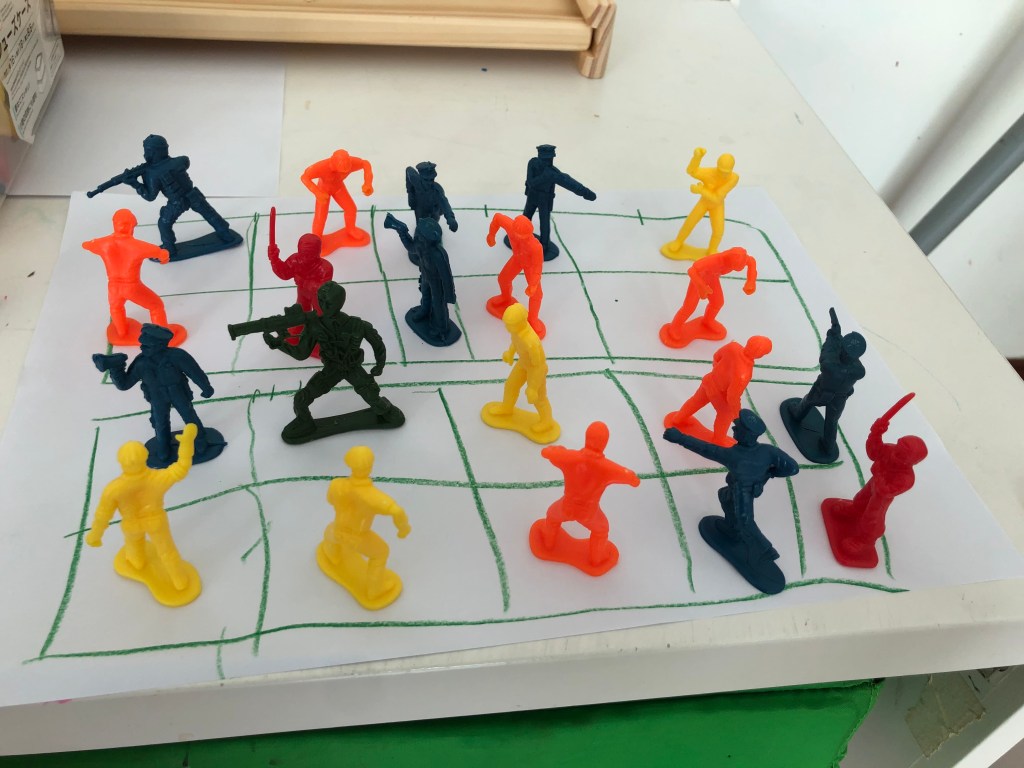
We used soldiers as the counters for ten frames =)
We used dinosaurs too ! (See us add 4 + 3 using ten frames)
After a few months of practice, Shalem has grown more confident in identifying quantities like 6,7,8, 9 quickly and accurately without counting. And then 11,12,13……20 quickly without needing to tax his mental capacity to hold such huge numbers. It is cool as he learns how to subtilise 10 as 2 rows of 5, and 12 as 2 rows of 5 + 2 .
I feel this has helped him to have the metacognition that he can hold quantities of numbers in his head without counting. For instance, he would think, “I can hold 5 counters in my head and add on 2 to make 7. the 5 didn’t disappear, its in row and I don’t have to count them again. “
With the ten frames, it is a way the objects in their head can be concretised. With adequate (many many many) practices, they would know if the first row was filled up, it means there are 5 counters, I need not count 5 again.
That being said, we had weeks of practice where I would count aloud the first row of 5, and then point out that there are 5 in the first row, and then count on 2 more. In the next few weeks, I got Shalem to touch the first row and say, “five” and then count on the next row. He was quick and he would mentally count and give me the total number, but I thought it was a good practice for him to acknowledge that there are five concrete counters in the first row.
The concept of addition requires children to know there A has X number and B has Y number of objects. And you want to find out how many objects there are altogether. Pure rote learning can get children churning out correct answers and knowing the procedures to get the correct answer but they may not know what they are doing.
I want Shalem to know exactly what he is adding and why he is adding items. When we were at the topic of nest, I would tell him Mama bird has 3 worms, Papa bird has 5 worms, how many worms do they have for baby worm? And when we were at the topic of apples, there we are, having him add up the apples in the bag (training him to mentally hold 5 apples in his head).
And he is beginning to get better at the rly advanced skill (for his age) of the putting the first number in his head and then counting on. “5+3 —put 5 in your head, count on 6,7,8 wout starting from 1 all over again). The mental load is great, if he can subitise well, he can hold 5 in his head longer and add on 3 more.
Note: Don’t worry if your child seems to forget what he learnt. When we stopped ten frames for a week, Shalem needed revision too.
My reason for introducing more than one addition strategy
The reason I introduced so many strategies is because i cant figure out which one is the best for him and… isnt math about mental agility and problem solving? So for now we will just explore various ways of addition as long as he isnt confused!
I feel its beneficial for him to be exposed to a variety of methods and then settling on the one he is most comfortable with. The different methods also helps him understand the previous methods more and consolidates the concept of addition.
What we do sometimes is, I would state that he has to try using method X to add 3 questions. And with the last 2 questions he can use any method he likes. He will choose abacus every time!
And I would not interfere with his choice, and allow him to count from 1 as he finds comfortable. I think its developmental and I want him to come to his own conclusion one day,
” WHY am I counting to 5 again when I know that I already inputed 5 in the first row? Oh, I actually know that I can hold 5 in my head from the practices from 10 frames.Let’s count on after 5 ”
And in FACT, HE SHOWED SIGNS OF THIS last week, after 3 months of practices ( WE don’t do addition daily, maybe 2 days in a week with some weeks of break in between, and only 5 min a time). I am so happy.
So far his fav and most comfortable strategies is still his fingers for small numbers, and abacus (adding 2 rows) for bigger numbers. Yay, I know what is my child’s fav addition method. I am so glad to know that. I know particular students’ favourite method, and I’m glad I know my own son’s too! I am so glad to be ur Math teacher Shalem:)
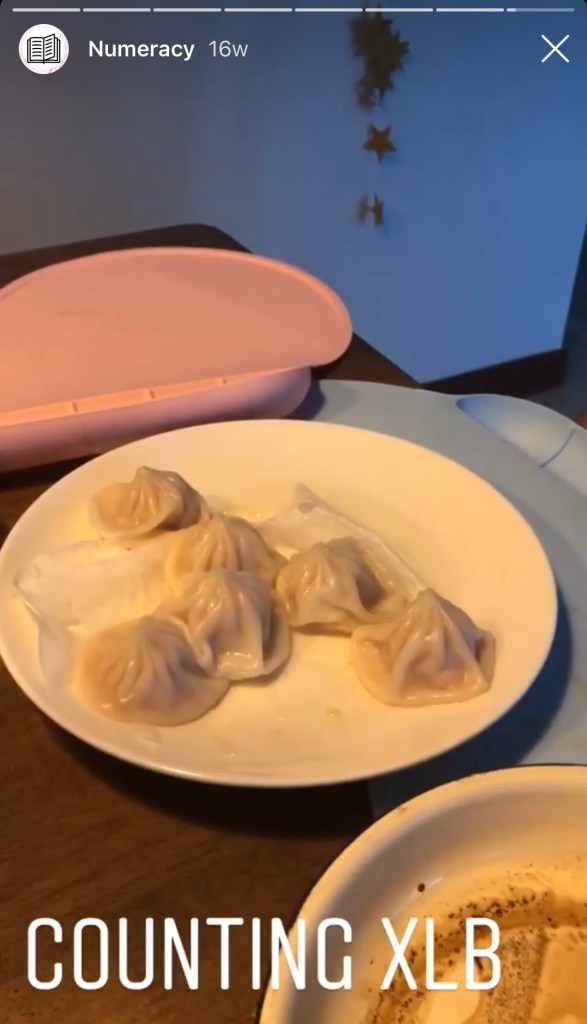
AND mummies, you are the BEST teacher of your child, you know if its better to stick with one method and fully grasp that first before moving on to others. You know if counting dumplings off the dining table works best for your child! =)
I’m glad to FINALLY have the time to document something systematically. It’s so easy to feel unaccomplished as a stay at home mum, because much of your work and effort isn’t documented and it seems to undo itself daily (housework). At the end of the day or week, you felt that you have done NOTHING despite working SO HARD! I find myself choosing between housework, napping (so needed as I don’t through the night) or having structured play (cough “lessons”). Some days, I find myself choosing the two former choices and I feel guilty about it. Why am I staying home when I’m not “value adding” to my children’s life. I’m sure working mums face the same questions and same guilt of not spending enough time with their kids.
But I believe that if we had time to sit down and look at our children, we can see the fruits of our labour in their lives. We may not all teach math and celebrate their mathematical success, but we teach them morality, virtues and good habits, we teach them to be brave, kind and good. There might be many days where you feel like your child has learnt absolutely nothing from you, but there are also times when you feel that your child is growing up well and you are so proud of him/her. Did your ever impatient child remember to say ‘please’ today? Can your child put own his own socks and button his own shirt? Did your child repeat an instruction or a house rule, reminding himself what is the right thing to do? Who else were their teachers but you, tired mama! Did your child who spilled milk all over the kitchen, (breaking three rules at the same time because of that) took initiative to mop up the mess? At least he is trying to do one thing right!
When I was feeling down as my son had been unruly, talking to a fellow mum who reminded me of what I do best is really uplifting and needful. We are all uniquely made, with unique gifts and talents. Our children are likewise unique too, some can grasp math concepts faster , but others listen to instructions and are so ever patient and loving. I believe we are all specially chosen and placed to be the mamas of our children! Let us believe in that and let’s be a community of mums who affirms each other, and most importantly, affirm and believe in our children.
“Behind every child who believes in himself is a parent who believed first.”
May this post serves to encourage mummies that you can be the best teachers for your kids =) Children catch on to our joy easily! Make teaching fun for yourselves and learning will be fun for your kids=)
I haven’t been the most enthusiastic in teaching Mathematics. Perhaps I feel that English is so much more interesting/varied/challenging to teach.
But I found a gem of a counting set and decided to document the various ways that parents can have fun doing Math with their todds at home! I’m trained in Primary education, not sure if it’s the Ecda model, but I thk it shud be similar
Math is a conceptual subject that success in more complicated algorithms builds upon previous knowledge and mastery. It’s important to teach a concept slowly and clearly step by step and get ur child to master the each step/skill/concept first before moving on to the next step/level/procedure. For e.g. not to teach the addition / multiplication algorithm before the child grasp the CONCEPT of addition and multiplication.
I’ve started Mathematics concepts with Shalem early! And this was the sequence of concepts and activities that Ive taught him.
1) Counting off 1-10 using rhymes/song. We do random counting on from 1-10 and sing nursery rhymes throughout the day. Eg, 1,2,3,4,5 once I caught a fish alive. 1,2 buckle my shoe etc. My mil allowed Shalem to watched youtube , so he has also picked up counting (NOT counting on) through the song and rhymes on youtube as well.
2) Introduction toCounting on – one to one correspondence of numbers with every day objects. I thk we started when Shalem was around one ( I haven started with my 15m baby girl cuz she isn’t ready, read disclaimer below ). We counted soft toys and cups at home , cookies when we were out and cars on the road. It’s important for them to attribute ONE number to ONE object when counting on. Parents can point to objects when counting on slowly. It is ok if they don’t count along or can’t count accurately for now. Just getting them into the habit and wonder that objects CAN be counted is a great start. I recall lazy mornings where he would stand at the window and looked at the passing cars below and count them, albeit not accurately yet. He was a year plus so it was ok! The act of counting on his own initiative was an encouragement to me.
3) Being able to recognise numerals to 10 (and then to 20) We (My mil and I as she was looking after Shalem full time then) used a combination of books and flashcards(gulp) to teach Shalem the symbols that represented each number (1 is one, 3 is three). I believe learning should be fun and active , especially for toddlers, hence I took my mil’s flashcard and place it around the house. I asked Shalem to run to / crawl/ hop/ hi-5/pick for me the numbers that I call out. And I celebrate each success with loud applause and affirmation. He had a whale of time doing this.
I believe in starting slow and not moving on to the next thing before mastery, so it would look like. “Shalem, this is number 1. I put number 1 on the floor now. Can you hop on number 1? Wow! Great job!!!” If he is up to it, I would show him another number. “Shalem this is 2. Look it has a curve and a straight line. Can you draw 2 in the sky with your hands? Can you draw 2 with you butt? Ok, I will put number 1 and 2 on the floor. I want you to hop onto the correct number when I call out ok? Ok Shalem hop to 2! “
How I added kinesthetic and game element to teaching.
I also believe in pointing out numbers to kids when we are outside, so they can see how numbers are used in their environment (IMPT thing that Ive learnt in NIE). We point out numbers in blocks of flats, numbers in buses, numbers on food items etc. From that Shalem learnt that numbers can be used to represent objects, and represent quantity / weight as well. He loved the number 16 because we lived on the 16 floor.
With just these methods, Shalem mastered recognizing and counting on the numerals 1-20 well before his 2nd birthday! Cant remember exactly when but our second child arrived when he was 2 years and 2 week old and since then the formal teaching of mathematics ceased. What we did for one whole year was just counting objects in our environment, maybe tracing some numbers here and there =)
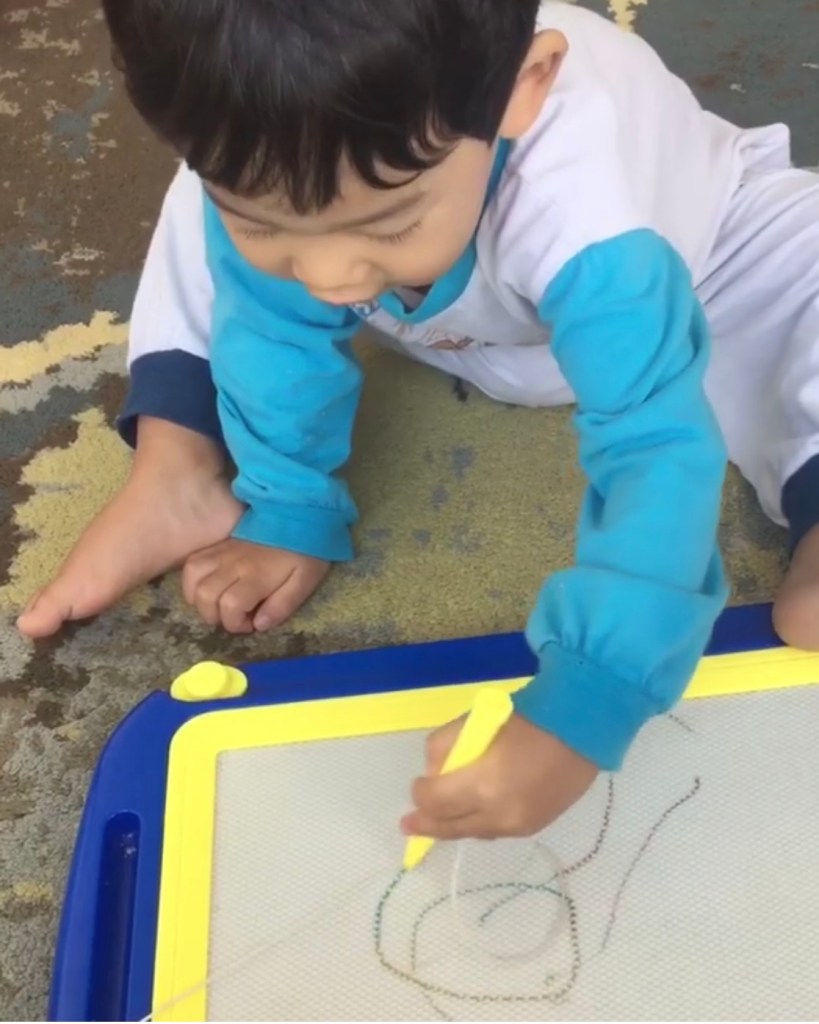
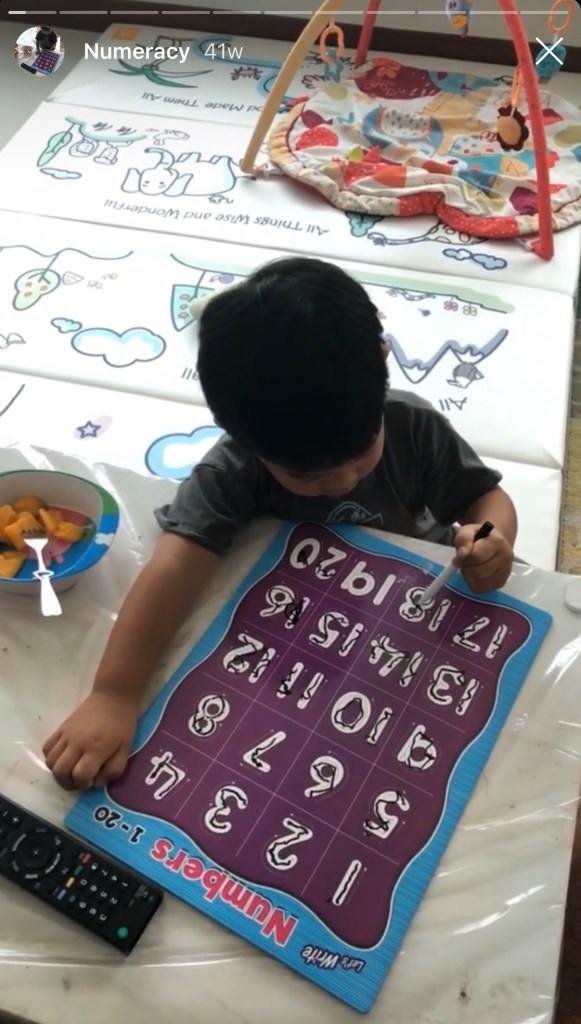
Shalem practicing writing 1 and 0 at a year and a half! That’s about all he mastered free hand. I was more focused on teaching him reading the whole of his 2nd year of life. Only resumed teaching him how to write numbers at 3 years +.I can’t remember exactly when Shalem could count and recognised number to 20. But Im sure it was before Mei Mei arrived. Went back to see some pics, he was tracing this about 41 weeks ago, that means he had mastered numerals to 20 before that as I wouldn’t let Shalem tackle something he hasn’t mastered. Learnt that the hard way from teaching Pri kids. =)
4) Being able to see the quantity or 2 / 3 without counting.
I must have said to Shalem, “Look there are 2 cars” etc when we are out. One day he told me, “mummy, two dogs.” He obviously didn’t count them but could grasp the concept of 2. I think its also a essential skill to be able to “see” the quantity of small objects without counting. It would have been terrible for us as adults or housewives right, if we we cannot roughly estimate how many Tupperwares we have on the drying rack at a glance and have to count from one. I realised some of my special needs students are not able to do that, and counted from one every single time even though there were only 3/4 objects. It was painful to watch especially when we are doing multiplication (YES p1 topic). A strategy of bundling in 5s or 10s would be helpful for her. Hope I will have time to share more about this in the future.
5) More deliberate practices of really counting how many objects there are. We call this skill one to one correspondence of object and number. This is actually the first lesson of P1 mathematics. Without having this prerequisite, a child will have problems understanding the concept of addition, or more and less, and even of subtraction. For a period of time, Shalem was randomly counting to 10 for all objects I asked. It was really funny, he HAS to count to 10 , even thought there were 5 balls on the table. I think this is part of his development, children like to see things done in “completion” and counting to 10 was part of this. It was an AHA moment, when he realise that things can be less than 10.
The way I taught him this was to get him to count objects slowly, point to each one (I placed them on a line) and when the objects ran out, I would exclaim, “STOP!” And we both would laugh. After a few tries, he would mimic me. He would count on and then say “STOP” when there were no more objects. This was the start of him understanding one to one correspondence. To build on his mastery and accuracy, we had more practices counting things at home and out.
How I taught him that he need not count on to 10 each time we are counting objects.
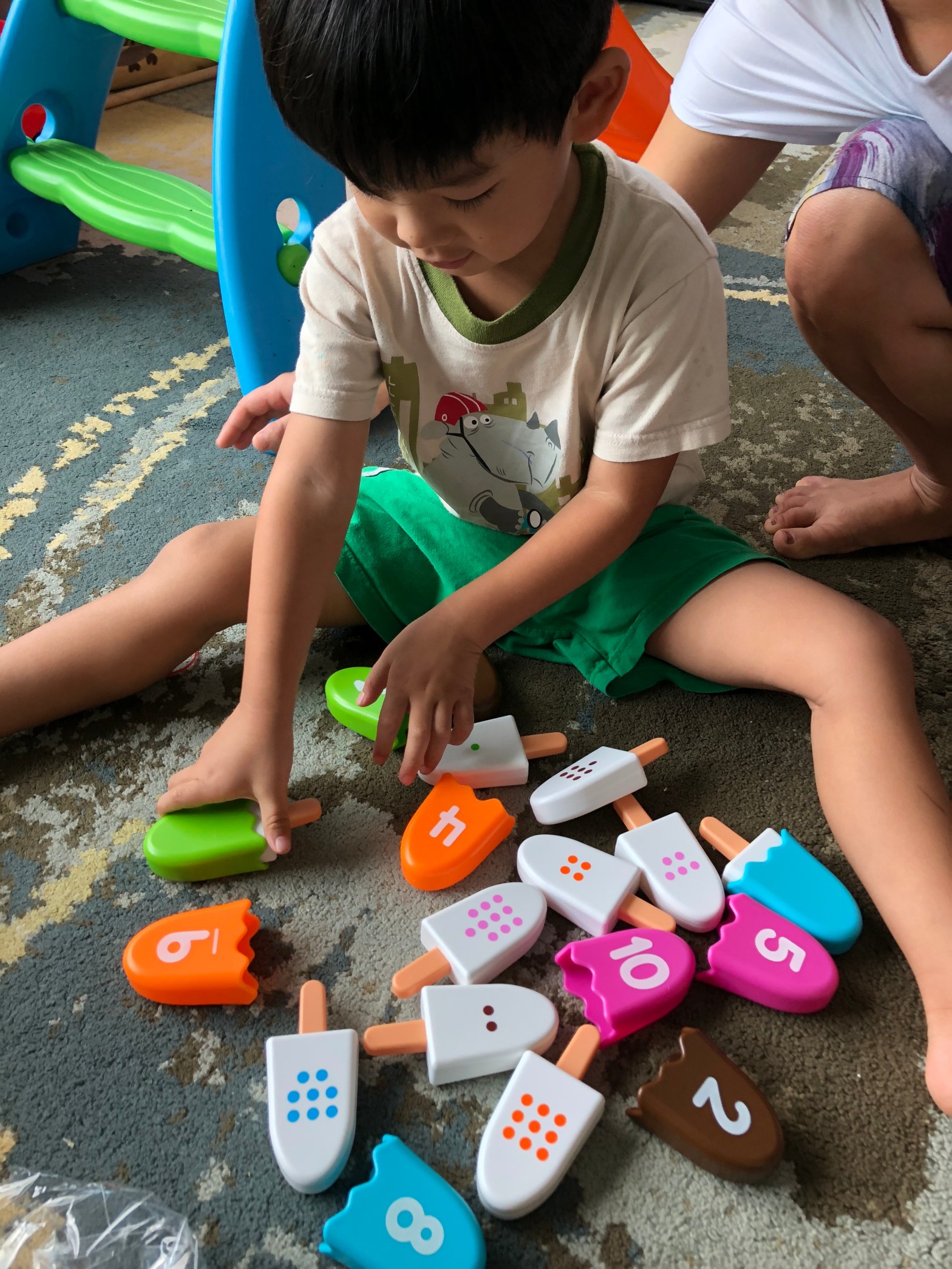
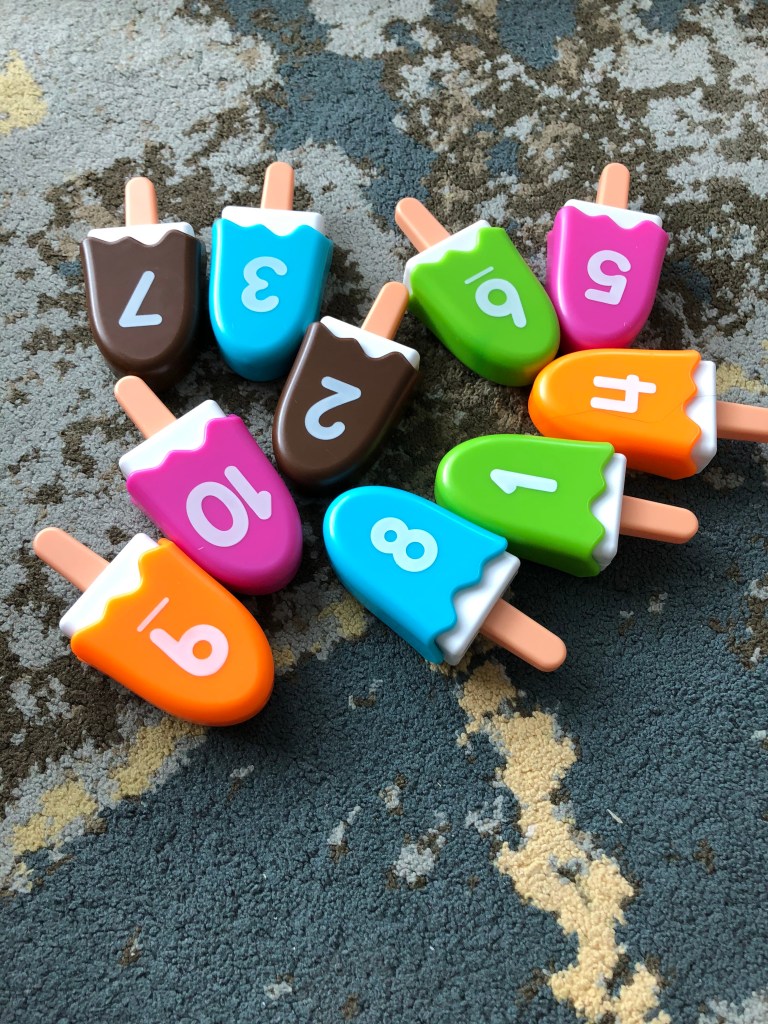
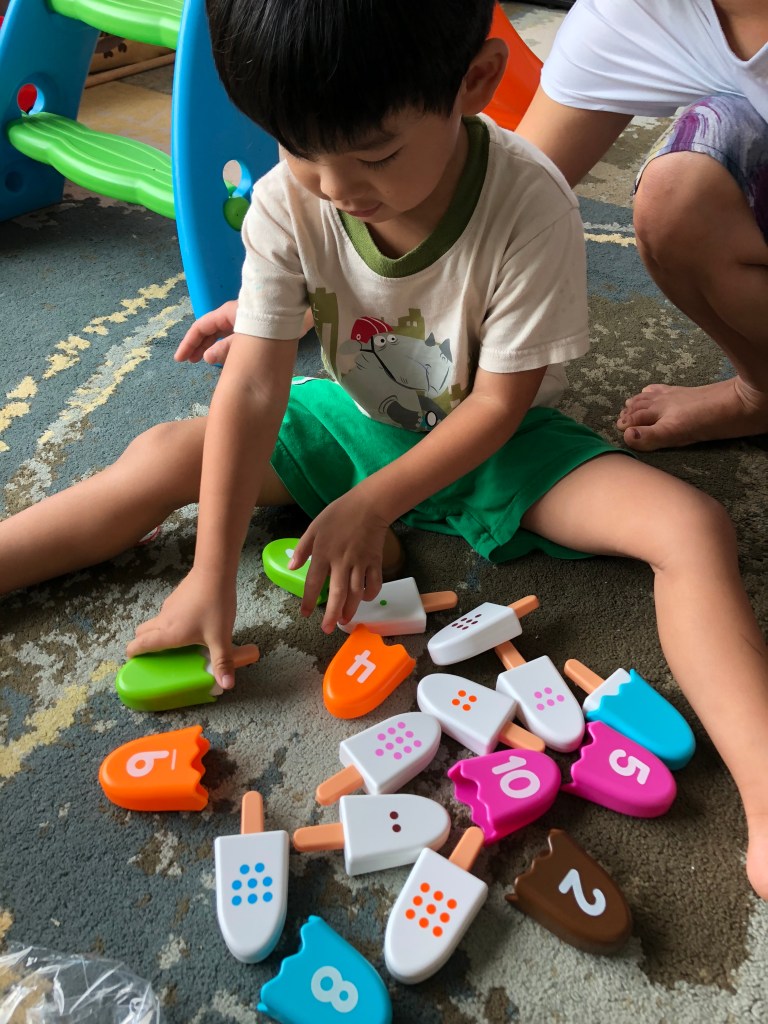
Here’s a summary of what Shalem could do( Prerequisite skill) before the popsicle game:
Able to count objects to 5 (one to one correspondence)
Knows that one object correspond to one number and there isn’t repeated counting or counting on to 10 when they are only 5 dots.
What we worked on with this set of tool (Or my own lesson objectives) 1. One to one correspondent counting for objects more than 5. I feel he has good accuracy up to 5, and then he will be inpatient and randomly count on. (As seen in the video below). But he can count objects to 10 if asked to slow down. So that’s what we did. Practice makes perfect! And counting will get less effortful and more automatic .
2. Strategy for counting You may be surprised but some of my p1 kids counted the same way as Shalem in the first video! Hapzard counting and objects get counted twice as they don’t know which object was counted before. So I feel it’s important to teach strategies for counting objects – left to right, top to bottom.(See video above) This is a far reaching skill don’t you think? We count objects so often.
3.Verbal recall, short term memory Found it fun to just test and see if he can hold 3 numbers in his short term memory and he could! He can’t do 4 numbers yet ! Chunking and holding numbers in short term working memory is crucial to solving more complicated maths problems in the future.
4.What comes next? I wanted to do this as “number patterns” is a weak link observed in my p1/2 kids. Of course they can do simple straight forward questions like “2,3,4 ___ 6”. But once it’s a skip counting pattern , they get confused and frustrated.
A sense of number line is important to help in the above. By helping them see numbers in a continuation on a line, they get more comfortable in telling us what is missing.
To make it more fun, I got shalem to do a telematch with me. I placed some numbers at the other end of my hall and Shalem (and me) has to go take one number at a time and put it in the correct place before the other can go.
We are practicing turn taking too! Killing two birds with one stone.
Kids learn best with more senses employed, and kids also learn best through play
Please pardon my grammar, this was done over 3 weeks in bouts of 10minutes and now im too tired to look through them. I will review it again =) Enjoy!
Disclaimer: Shalem is a very fast learner, and he IS enthusiastic to learn. But don’t be pressured to start early as it will backfire and even hinder future learning. Learning at home should be filled with fun and joy!And lots of affirmation and encouragement. Our children catch on our joy and learn really quickly ! Mei Mei isn’t ready for any ” formal” math yet at 15 months. We also don’t do screen time with her. What I do with her is just singing songs/rhyme 1-10 and counting toys/ books / spoons of milk milder as I pour them into her milk bottle. Nothing is quite caught on yet, but each child learns and bloom at their own pace =)










 Shalem and Shekinah